

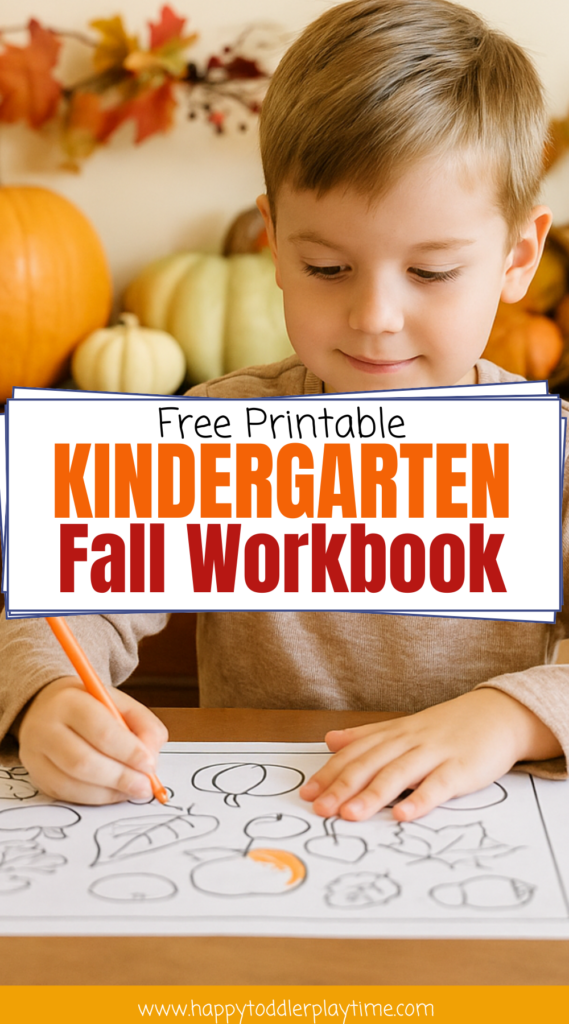
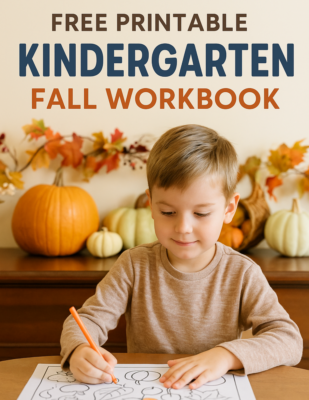
If you’ve got a kindergartner at home, you already know how much they love hands-on activities that feel more like play than “work.” That’s exactly why I created this Free Printable Kindergarten Fall Workbook — a fun, low-prep way for your child to practice letters, numbers, and even writing skills, all with a cozy fall theme. With over 30 pages of activities (think writing practice, fall coloring pages, counting, tracing, and patterns), this workbook is the perfect mix of learning and fun to keep your 5- or 6-year-old busy and engaged this season.
And the best part? You don’t need fancy supplies. Just print it out, grab some crayons, scissors, and a glue stick, and your child will be ready to dive right in. To grab your free workbook, simply download it using the form below.
Why You’ll Love This Kindergarten Fall Workbook
There are a lot of printables out there, but here’s why this one is a must for fall learning at home:
- Seasonal themes kids love – pumpkins, apples, leaves, and acorns keep the activities exciting.
- Skills that matter – your kindergartner will practice letter recognition, number writing, color matching, and shape sorting in a way that feels playful.
- Fine motor practice built in – cutting, tracing, and coloring pages sneak in the skills kids need for handwriting and beyond.
- Screen-free fun – easy, printable pages mean less time staring at a device and more time practicing with real paper and pencils.
- Perfect for home or classroom – whether you’re homeschooling, adding enrichment to your child’s day, or looking for quick classroom activities, this set fits.
What’s Inside the Workbook
Here’s a peek at what you’ll find inside the Kindergarten Fall Workbook:
- Alphabet Tracing Pages – trace uppercase and lowercase letters with fall-themed illustrations.
- Counting Activities – from counting pumpkins to adding up fall leaves, kids build number sense.
- Fall Coloring Pages – just the right mix of simple and detailed designs for kids to color in.
Each page is designed to be simple enough for kindergartners to do mostly on their own but still meaningful enough to build those foundational skills.
Tips for Teaching Numbers, Letters, and More
Before you dive into the workbook, here are a few quick teaching tips to make the most of it:
- Keep sessions short. Five to ten minutes of focused practice is more effective (and way less frustrating!) than long stretches.
- Mix in movement. After working on a worksheet, do a quick active game — like jumping while counting or tracing letters in the air.
- Use real objects. Pair the workbook with real-life fall items (count acorns, trace letters in a tray of leaves, or sort pumpkins by size).
- Encourage independence. Let your child color or decorate their pages their own way — ownership makes learning stick.
- Celebrate progress. Hang finished pages on the fridge or keep them in a binder so your child can see how much they’ve learned.


Grab Your Free Printable Kindergarten Fall Workbook
Ready to get started? This workbook is completely free — all you need to do is download it using the form below. Once you have it printed, you’ll have an easy, ready-to-go set of fall learning activities at your fingertips.
How to Teach Your 5–6 Year Old to Write Sentences (Step by Step)
Learning to write sentences in kindergarten is like building with blocks—one simple piece at a time. Keep it playful, short, and super clear, and you’ll see confidence bloom fast. Here’s a kid-tested, easy-to-follow roadmap you can use at home in combination with this Fall Workbook:
- Start with a picture + talk time
Invite your child to look at the pictures in the workbook. Then have a quick chat: “Tell me about your picture.” This oral rehearsal is the secret sauce—kids say it first, then learn to write it. - Choose one strong sentence
From their chatter, help them pick a doable sentence: “I see a red apple.” Say it together 2–3 times, tapping one finger for each word. (This helps them hear that sentences are made of separate words.) - Stretch the sounds
Model how to “stretch” a word like gum: “r-e-d.” Ask, “What sounds do you hear?” They don’t need every letter yet—just celebrate the sounds they do hear. Use a quick sound box (three little squares) for short words to anchor those letters. - Use a simple sentence frame (when needed)
Offer training wheels for early writers:
- I see a ____.
- I like the ____.
- The leaf is ____.
Sentence frames reduce overwhelm and let them focus on spacing, sounds, and punctuation.
- Teach capitals, spaces, and periods with props
- Capital starter: Draw a tiny star at the start line = “Where the big letter goes.”
- Spaces: Use a “spaceman”—a popsicle stick or finger between words.
- Period: Place a dot sticker at the end to remind them to “stop.”
- Write it together (you model first, they try next)
On a whiteboard or scrap paper, model the sentence slowly, thinking aloud:
“Big I… space… s-e-e… space… a… space… r-e-d… space… l-ea-f… period.”
Then invite them to write it on their page. Keep it short and sweet—one strong sentence beats three frustrated ones. - Reread for meaning (does it make sense?)
Point under each word as they read it back. If something’s off, say, “Let’s fix it like an editor!” Tiny tweaks build pride and ownership. - Use a 5-star sentence checklist
Have a mini checklist they can color in:
- Capital at the start
- Spaces between words
- Sounds I hear
- End punctuation
- Makes sense
Quick examples to model
- Label → Sentence: “leaf” ➝ “I see a leaf.”
- Add detail: “I see a red leaf.”
- Time/place: “I see a red leaf at the park.”
Keep it light and consistent
Two to three days a week is plenty. Pair sentence writing with movement (read it in a silly voice, stomp each word, or draw a star for effort). If your child is tired, switch roles—you do the writing while they “help spell” and add the period. They’re still practicing all the right skills.
Simple tools that help
- A pocket-size word bank of sight words (I, see, the, like, and, to).
- Sound boxes (three little squares) for stretching CVC words (cat, red, bus).
- A spaceman stick (popsicle stick) for instant, kid-sized spacing.
- Stickers for periods—because punctuation is more fun when it sparkles.
Most important: celebrate the effort. At 5–6, sentence writing is brand-new muscle work. With pictures, talk time, one clear sentence, and a cheerful checklist, your writer will be saying, “Can I write another one?” in no time.
Whether you use it for morning learning time, quiet afternoon practice, or just a fun way to sneak in a little extra number and letter recognition, this Kindergarten Fall Workbook will keep your little one learning and loving every page.
Pumpkins, apples, leaves, and more — let’s make fall a season full of fun (and learning) for your kindergartner!
Play2Learn Toddler & Preschool Programs for Curious Toddlers
There is no limit to your toddler’s energy and curiosity. That energy and curiosity although a joy can be challenging at times. Their interest in just about everything around them is what makes them great learners. One and two year olds can soak up so much just from their senses!
But as a teacher or parent that thirst for learning can be exhausting. That is why I created this toddler and preschooler program. To help you get the most out of this time with your curious toddler without having to come up with creative ways to play and interact with them.
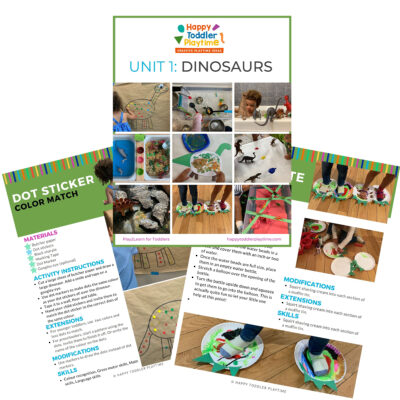
Play2Learn for Toddlers includes 20 Units for toddlers. Each 2-week toddler unit has 20 super easy to set up and engaging activities for toddlers 18 months to 3 years.
Play2Learn Preschool which includes 20 Units for preschoolers. Each 2-week preschoolers unit has 20 unique and easy to set up and engaging activities for preschoolers 3 years to 5 years. That’s over 800 learning activities for your toddler and preschooler at your fingertips! So many ideas you and your child will never be bored again!
These toddler and preschool lesson plans and activities will definitely keep you and your toddler and preschooler busy playing and learning!
Click here for more information: Play2Learn
Book: Exciting Sensory Bins for Curious Kids
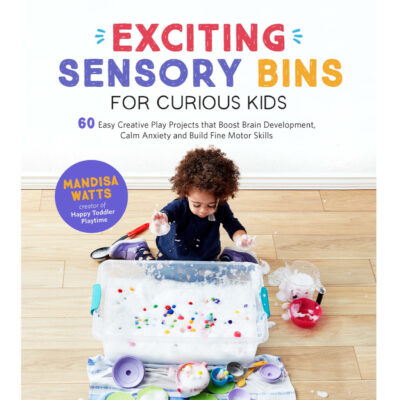
Did you know I wrote a book of sensory bins? Click here for more information Exciting Sensory Bin for Curious Kids. Or grab your copy at Amazon.
Boring afternoons are made exciting with awesome animal-based bins, like Salty Shark Bay or Yarn Farm. Pretend play bins like Birthday Cake Sensory Play or Bubble Tea Party encourage creativity and imagination. And your kids will have so much fun they won’t even know they’re getting smarter with STEAM (science, technology, engineering, art and math) activities like Sink or Float Soup, Magnetic Letter Hunt or Ice Cream Scoop and Count.
Designed for toddlers 18 months and up.
Book: Super STEAM Activity Book for Kids
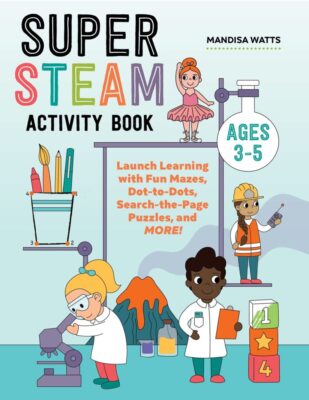
Learning all about science, technology, engineering, art, and math sets kids up for scholastic success―and it can be so much fun! Watch kids enjoy building STEAM skills as they color friendly fish, help water find its way to tree roots, solve math problems with mazes, and more.
Find out more and grab your copy here.
Designed for preschoolers 3 years old and up.
Book: Big Book of Riddles for Kids
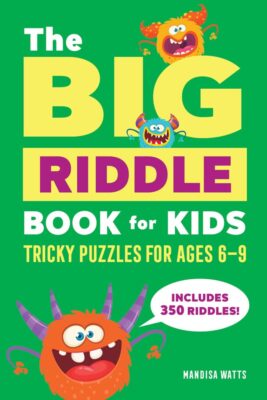
Riddle me this: What’s an exciting way to practice critical thinking while having a blast? The Big Riddle Book for Kids, of course! From hilarious puns to tough brain teasers, kids can build problem-solving skills with hundreds of riddles tha. t show them how to think outside the box.
- 350 riddles for kids—Have hours of fun with riddles, puns and jokes, and math and logic puzzles that’ll get their wheels turning!
- Level up their skills—Riddles get trickier as kids progress through the book, challenging them as they get better at solving puzzles!
- Double-check their work—Kids can check their answers in the back of the book with a handy answer key.
Help children expand their minds while having fun with this puzzle book for kids!
Designed for kids ages 6 years old and up.
TV Show: Curious Crafting
I’m so excited to share my crafting TV show Curious Crafting which launched in July 2022 on TVOkids and TVOkids YouTube! Season 2 aired in August 2023! My show was also nominated in 2023 for Best Live Action Preschool Series by the Youth Media Alliance Awards of Excellence.
Curious Crafting Season 1 is also now airing in Australia on ABC! Watch it here!
Set in the ultimate crafting space, Curious Crafting is a short form pre-school age series about the joy of making crafts. I lead a rotating cast of adorable little preschoolers (including my own) making magic out of common household objects.
In each episode we transform recycled items into magical crafts like a milk carton school bus, paper bag puppet or cotton pad turtle. The crafters learn and laugh their way through each activity while demonstrating what their young imaginations can create.
Curious Crafting shares the adventure and joy of making art with takeaway lessons for creating crafts at home.
This show designed for toddlers and preschoolers 2.5 years old and up.