

We do a mix of summer camp weeks and at-home summer camp weeks at our house. Some weeks my kids are off doing organized camps, and some weeks we’re hanging at home—filling the days with things like swimming, biking, strawberry picking with friends, or exploring a new beach or playground.
But some days, especially in that post-lunch quiet stretch, we love pulling out a cool art project to keep things fun. That’s exactly how Pendulum Painting became part of our home summer camp series this year.
It was one of those days where we’d already been swimming in the morning and needed something creative, a little different from the usual painting setup. This activity checks all the boxes: movement, color mixing, a little science, and a lot of whoa, that looks awesome.
Why You’ll Love Pendulum Painting
- No fancy materials needed. You probably have most of this stuff at home already!
- It combines art and science. Kids learn about pendulums and patterns while making big, colorful paintings.
- Big movement + big art. Great for outdoors or a garage space where kids can get messy.
- Great for a variety of ages. Toddlers love the drippy paint effect, while bigger kids can experiment with swing speed and angles.

Materials You’ll Need for Pendulum Painting
- Two sturdy chairs (or anything similar in height)
- A long stick — broom handle, hockey stick, or in our case, an old cross-country ski
- String
- 2–3 paper cups
- A craft stick (for stirring paint and poking holes)
- Washable paint in primary colors
- Water (to thin the paint if needed)
- Large paper or canvas (butcher paper, cardboard, or poster board work great)
How to Set Up Pendulum Painting
We set this up in the backyard on the grass so that I wouldn’t need to place a drop cloth on the ground. But you could definitely do it in a garage or driveway if you prefer. This could get messy so have kids where clothes they can paint in or their bathing suit and they can just hop into the pool or sprinkler after.
1. Set Up Your Pendulum Frame
Place two chairs about 3–4 feet apart. Lay your long stick across the tops of the chairs. This is what your pendulum will hang from. Make sure it’s stable and won’t roll off easily—if needed, tape it down.
We used an old cross-country ski for our stick, but a broom handle or mop handle would work just as well.


2. Prepare Your Paint Cups
Take a paper cup and poke a small hole in the bottom of each using a craft stick or a pencil. You want a hole about the size of a pencil eraser—big enough for paint to drip through, but not so big that it pours out all at once. Poke another hole on each side of the top of the cup.
Next, fill the other cups about 1/4 full with washable paint. If your paint feels thick, add a little water and stir with the craft stick until it flows smoothly. Try using two constrasting or colors or two primary colors so that they mix together and create a new color on the paper or in the pendulum.

3. Tie Your String
Cut a piece of string about 2–3 feet long. Thread and tie one end of the string through each hold in the cup with the holes. Then place it in the middle of the stick/ski, so it hangs down like a swing in the middle of your chair setup.
4. Lay Out Your Paper
Position your large paper or canvas on the ground under the pendulum. You can tape it down if it’s windy or place rocks at the corners.
5. Let the Painting Begin!
Now the fun part. Pour the first coloring in the cup pendulum. Gently pull your paint cup pendulum back and let it swing across the paper. As it swings, the paint will drip and create beautiful, swirling, looping designs.
Try moving the cup higher or lower, swinging it in different directions, or adding more cups with different colors.


The Science Behind a Pendulum
While your kids are busy watching the paint drip and swirl, there’s some cool physics happening:
- A pendulum is anything that swings from a fixed point, like a clock weight, a swing, or in this case, a cup of paint.
- Gravity pulls the cup back down after you lift and release it.
- The way it swings—side to side, forward and back—is called oscillation.
- The length of the string and how high you lift the cup affect how fast or slow the pendulum swings.
Basically, the longer the string, the slower and wider the swings. If your kids are into it, they can experiment with shorter or longer strings, different paint thicknesses, or cup sizes.
It’s one of those awesome little art-and-science moments where they’re learning without even realizing it.
Clean-Up Tips
- Washable paint makes life easier—hosing everything down after is the fastest way!
- Rinse out the cups and store them for future pendulum painting days.
- Let the paintings dry flat before hanging or displaying them.
Variations to Try
- Use multiple cups: Tie two or three cups on separate strings for layered effects.
- Add glitter or metallic paint: For extra sparkle.
- Try different paint colors: Challenge kids to use only primary colors and see what new shades they create as the drips mix.
- Make it a timed challenge: Set a timer for 5 minutes and see how much of the paper gets covered before the time’s up!
Pendulum Painting became one of our favorite at-home summer camp activities because it feels a little like a science experiment, a little like a messy art day, and a whole lot of fun.
It’s easy to set up, completely adaptable depending on your space and supplies, and honestly just so satisfying to watch.
If you try this one, I’d love to hear how it goes for your family! Tag me on Instagram or drop a comment below with your pendulum painting setups—whether it’s two chairs and a ski stick or something totally creative I haven’t thought of yet.
Here’s to more low-stress, high-fun summer activities and a little less “What are we doing today?” every morning!
Play2Learn Toddler & Preschool Programs for Curious Toddlers
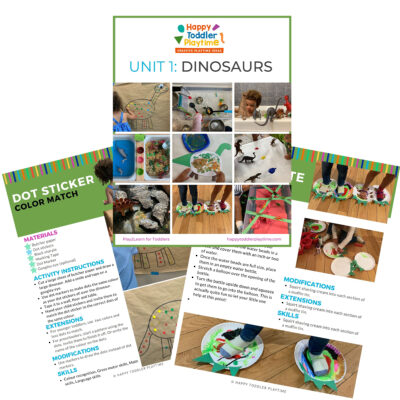
There is no limit to your toddler’s energy and curiosity. That energy and curiosity although a joy can be challenging at times. Their interest in just about everything around them is what makes them great learners. One and two year olds can soak up so much just from their senses!
But as a teacher or parent that thirst for learning can be exhausting. That is why I created this toddler and preschooler program. To help you get the most out of this time with your curious toddler without having to come up with creative ways to play and interact with them.
Play2Learn for Toddlers includes 20 Units for toddlers. Each 2-week toddler unit has 20 super easy to set up and engaging activities for toddlers 18 months to 3 years.
Play2Learn Preschool which includes 20 Units for preschoolers. Each 2-week preschoolers unit has 20 unique and easy to set up and engaging activities for preschoolers 3 years to 5 years. That’s over 800 learning activities for your toddler and preschooler at your fingertips! So many ideas you and your child will never be bored again!
These toddler and preschool lesson plans and activities will definitely keep you and your toddler and preschooler busy playing and learning!
Click here for more information: Play2Learn
Book: Exciting Sensory Bins for Curious Kids
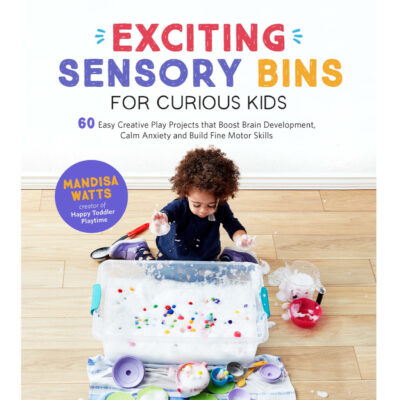
Did you know I wrote a book of sensory bins? Click here for more information Exciting Sensory Bin for Curious Kids. Or grab your copy at Amazon.
Boring afternoons are made exciting with awesome animal-based bins, like Salty Shark Bay or Yarn Farm. Pretend play bins like Birthday Cake Sensory Play or Bubble Tea Party encourage creativity and imagination. And your kids will have so much fun they won’t even know they’re getting smarter with STEAM (science, technology, engineering, art and math) activities like Sink or Float Soup, Magnetic Letter Hunt or Ice Cream Scoop and Count.
Designed for toddlers 18 months and up.
Book: Super STEAM Activity Book for Kids
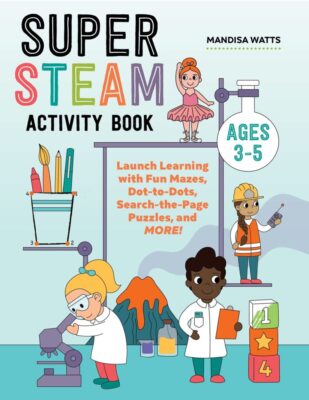
Learning all about science, technology, engineering, art, and math sets kids up for scholastic success―and it can be so much fun! Watch kids enjoy building STEAM skills as they color friendly fish, help water find its way to tree roots, solve math problems with mazes, and more.
Find out more and grab your copy here.
Designed for preschoolers 3 years old and up.
Book: Big Book of Riddles for Kids
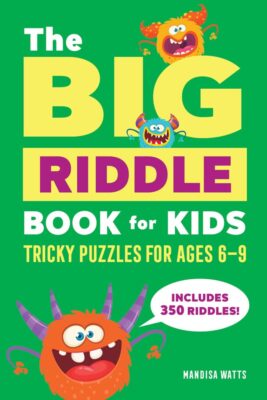
Riddle me this: What’s an exciting way to practice critical thinking while having a blast? The Big Riddle Book for Kids, of course! From hilarious puns to tough brain teasers, kids can build problem-solving skills with hundreds of riddles tha. t show them how to think outside the box.
- 350 riddles for kids—Have hours of fun with riddles, puns and jokes, and math and logic puzzles that’ll get their wheels turning!
- Level up their skills—Riddles get trickier as kids progress through the book, challenging them as they get better at solving puzzles!
- Double-check their work—Kids can check their answers in the back of the book with a handy answer key.
Help children expand their minds while having fun with this puzzle book for kids!
Designed for kids ages 6 years old and up.
TV Show: Curious Crafting
I’m so excited to share my crafting TV show Curious Crafting which launched in July 2022 on TVOkids and TVOkids YouTube! Season 2 aired in August 2023! My show was also nominated in 2023 for Best Live Action Preschool Series by the Youth Media Alliance Awards of Excellence.
Curious Crafting Season 1 is also now airing in Australia on ABC! Watch it here!
Set in the ultimate crafting space, Curious Crafting is a short form pre-school age series about the joy of making crafts. I lead a rotating cast of adorable little preschoolers (including my own) making magic out of common household objects.
In each episode we transform recycled items into magical crafts like a milk carton school bus, paper bag puppet or cotton pad turtle. The crafters learn and laugh their way through each activity while demonstrating what their young imaginations can create.
Curious Crafting shares the adventure and joy of making art with takeaway lessons for creating crafts at home.
This show designed for toddlers and preschoolers 2.5 years old and up.