

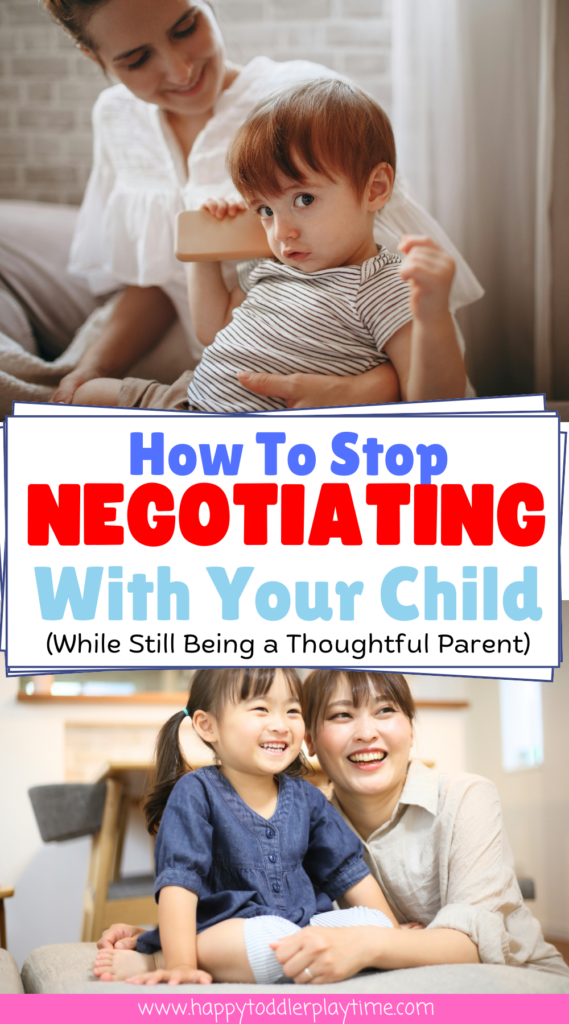
Negotiating with kids can sneak up on you. One minute you’re calmly explaining why shoes need to go on, and the next you’re in a full-blown courtroom debate about which shoes, how they go on, and why today is actually not a shoe day at all. Ask me how I know.
With three kids—including twins—negotiation used to feel constant in our house. Everything was up for discussion: bedtime, snacks, getting in the car, brushing teeth. I caught myself explaining, re-explaining, and defending decisions like I was presenting a PowerPoint to a skeptical board of directors. Exhausting doesn’t even cover it.
Here’s the good news: stopping negotiation doesn’t mean becoming rigid, cold, or authoritarian. It means creating clarity, consistency, and calm—so kids don’t feel the need to negotiate in the first place.
Why Kids Negotiate So Much (And Why It’s Not Personal)
Kids negotiate because it works. Even a small chance of changing the outcome is worth trying. They’re also wired to seek autonomy, fairness, and control—especially preschoolers and early elementary kids who are just figuring out how much power they actually have in the world.
Add siblings (or twins) into the mix and negotiation skyrockets. Kids watch each other closely. One exception becomes a precedent. One extra snack becomes a courtroom exhibit for future arguments.
Negotiation isn’t bad behavior. It’s communication. The problem starts when everything becomes negotiable.
The Hidden Cost of Constant Negotiation
Constant negotiation drains parents fast. It also sends mixed signals to kids. When boundaries move depending on how persuasive or persistent they are, kids learn to push harder next time. That’s not because they’re manipulative—it’s because the system is unclear.
Clear boundaries actually feel safer to kids. Predictability lowers anxiety. When kids know the answer won’t change, they stop asking (eventually).
How To Stop Negotiating With Your Child
Shift #1: Decide Before You Speak
One of the biggest game-changers is deciding before you respond. When parents think out loud, kids hear opportunity.
Instead of:
“Well… maybe after dinner… unless it’s too late…”
Try:
“Snack time is after dinner.”
Short. Calm. Done.
You don’t need to announce that something is non-negotiable. You show it by not negotiating.
Shift #2: Use Fewer Words (Way Fewer)
This one is hard, especially for thoughtful, empathetic parents. But long explanations invite debate.
Kids hear:
- Reasons = openings
- Details = leverage
- Emotion = uncertainty
A simple script works wonders:
- “That’s not available.”
- “I hear you. The answer is no.”
- “You’re disappointed. I get that.”
Then stop talking.
Silence is uncomfortable at first. It gets easier. I promise.
Shift #3: Separate Feelings From Decisions
Kids are allowed to be upset about limits. That doesn’t mean the limit changes.
This was huge for me as a parent. Once I truly accepted that my kids’ frustration wasn’t something I had to fix, negotiations dropped dramatically.
You can say:
“You really wanted more screen time. That’s hard.”
And still mean:
“Screen time is over.”
Comfort the feeling. Hold the boundary.
Shift #4: Offer Choices Within the Boundary
This is where autonomy lives. Not in whether the rule exists—but in how it’s carried out.
Instead of:
“Put on your pajamas.”
Try:
“Do you want the red pajamas or the blue ones?”
The boundary stays firm. The child gets control inside it.
With twins, this matters even more. Everyone wants fairness. Choices help prevent power struggles without turning every decision into a negotiation marathon.
Shift #5: Stop Answering the Same Question Repeatedly
Repeated questioning is negotiation in disguise.
Once you’ve answered clearly, switch to a repeat phrase:
- “Asked and answered.”
- “My answer is the same.”
- “I won’t keep talking about this.”
Say it calmly. Say it consistently. Then disengage.
The first few days feel rough. Then the behavior fades—because it’s no longer effective.
Shift #6: Hold the Line Once You’ve Set It
Changing your mind mid-negotiation teaches kids that persistence pays off. Sometimes flexibility is appropriate—but it should come from you, not pressure.
A helpful check-in:
- “Am I changing this because it’s reasonable?”
- Or because I want this conversation to end?
Kids learn quickly which one it is.
What About Older Kids?
Negotiation looks different as kids grow—and that’s okay. Family meetings, collaborative problem-solving, and shared decision-making all have a place. The key difference is when and how those conversations happen.
Not during the moment.
Not during a meltdown.
Not while everyone is hungry.
Planned discussions build skills. On-the-spot negotiations build power struggles.
The Twin Factor (And Why It’s Extra Tricky)
With twins, everything feels amplified. Comparisons. Fairness. “But they got to!” moments.
Consistency is your best friend here. When rules are predictable, kids stop monitoring each other’s outcomes so closely. One rule. Same response. Calm delivery.
Not easy. Very effective.
What Happens When You Stop Negotiating
At first, kids push harder. That’s normal. They’re checking whether the system really changed.
Then something surprising happens:
- Fewer arguments
- Faster transitions
- More trust
- Less emotional load on you
Kids relax when boundaries are steady. Parents relax when they stop defending every decision.
Stopping negotiation isn’t about being strict. It’s about being clear.
And clarity—especially in a house with three kids—is a gift everyone benefits from.
You’re not failing because your child argues. You’re learning how to lead calmly through it.
Play2Learn Toddler & Preschool Programs for Curious Toddlers
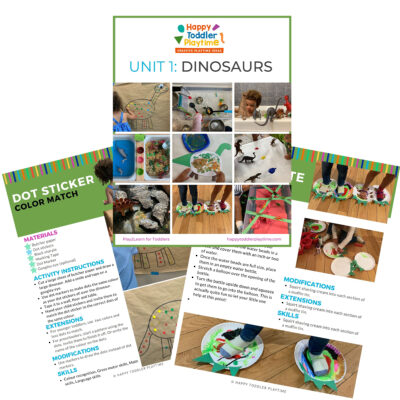
There is no limit to your toddler’s energy and curiosity. That energy and curiosity although a joy can be challenging at times. Their interest in just about everything around them is what makes them great learners. One and two year olds can soak up so much just from their senses!
But as a teacher or parent that thirst for learning can be exhausting. That is why I created this toddler and preschooler program. To help you get the most out of this time with your curious toddler without having to come up with creative ways to play and interact with them.
Play2Learn for Toddlers includes 20 Units for toddlers. Each 2-week toddler unit has 20 super easy to set up and engaging activities for toddlers 18 months to 3 years.
Play2Learn Preschool which includes 20 Units for preschoolers. Each 2-week preschoolers unit has 20 unique and easy to set up and engaging activities for preschoolers 3 years to 5 years. That’s over 800 learning activities for your toddler and preschooler at your fingertips! So many ideas you and your child will never be bored again!
These toddler and preschool lesson plans and activities will definitely keep you and your toddler and preschooler busy playing and learning!
Click here for more information: Play2Learn
Book: Exciting Sensory Bins for Curious Kids
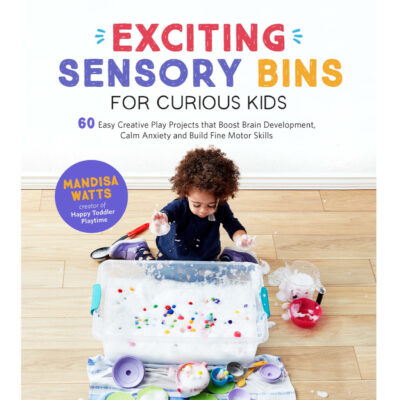
Did you know I wrote a book of sensory bins? Click here for more information Exciting Sensory Bin for Curious Kids. Or grab your copy at Amazon.
Boring afternoons are made exciting with awesome animal-based bins, like Salty Shark Bay or Yarn Farm. Pretend play bins like Birthday Cake Sensory Play or Bubble Tea Party encourage creativity and imagination. And your kids will have so much fun they won’t even know they’re getting smarter with STEAM (science, technology, engineering, art and math) activities like Sink or Float Soup, Magnetic Letter Hunt or Ice Cream Scoop and Count.
Designed for toddlers 18 months and up.
Book: Super STEAM Activity Book for Kids
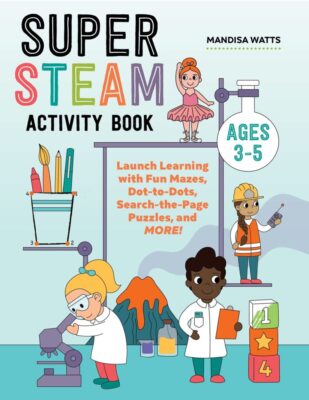
Learning all about science, technology, engineering, art, and math sets kids up for scholastic success―and it can be so much fun! Watch kids enjoy building STEAM skills as they color friendly fish, help water find its way to tree roots, solve math problems with mazes, and more.
Find out more and grab your copy here.
Designed for preschoolers 3 years old and up.
Book: Big Book of Riddles for Kids
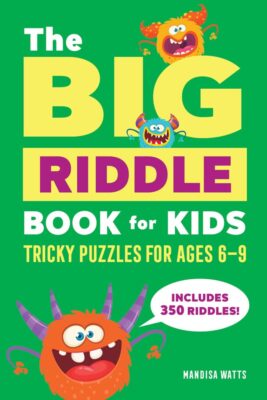
Riddle me this: What’s an exciting way to practice critical thinking while having a blast? The Big Riddle Book for Kids, of course! From hilarious puns to tough brain teasers, kids can build problem-solving skills with hundreds of riddles tha. t show them how to think outside the box.
- 350 riddles for kids—Have hours of fun with riddles, puns and jokes, and math and logic puzzles that’ll get their wheels turning!
- Level up their skills—Riddles get trickier as kids progress through the book, challenging them as they get better at solving puzzles!
- Double-check their work—Kids can check their answers in the back of the book with a handy answer key.
Help children expand their minds while having fun with this puzzle book for kids!
Designed for kids ages 6 years old and up.
TV Show: Curious Crafting
I’m so excited to share my crafting TV show Curious Crafting which launched in July 2022 on TVOkids and TVOkids YouTube! Season 2 aired in August 2023! My show was also nominated in 2023 for Best Live Action Preschool Series by the Youth Media Alliance Awards of Excellence.
Curious Crafting Season 1 is also now airing in Australia on ABC! Watch it here!
Set in the ultimate crafting space, Curious Crafting is a short form pre-school age series about the joy of making crafts. I lead a rotating cast of adorable little preschoolers (including my own) making magic out of common household objects.
In each episode we transform recycled items into magical crafts like a milk carton school bus, paper bag puppet or cotton pad turtle. The crafters learn and laugh their way through each activity while demonstrating what their young imaginations can create.
Curious Crafting shares the adventure and joy of making art with takeaway lessons for creating crafts at home.
This show designed for toddlers and preschoolers 2.5 years old and up.