

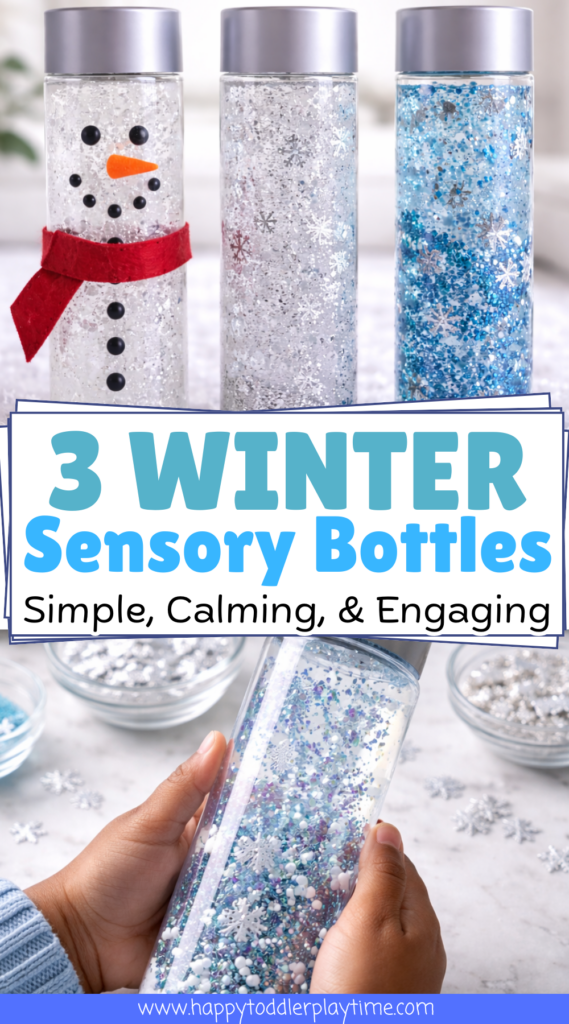
Winter sensory bottles are one of those quiet-time activities that don’t look flashy at first—but once kids get their hands on them, they’re hooked. These bottles are perfect for winter days when outdoor play is limited, energy is high, and you need something that feels calming without being boring. They’re soothing, visually interesting, and endlessly replayable.
What I love most about winter sensory bottles is how flexible they are. You can make them super simple with items you already have, or dress them up with themed details. They work for toddlers who love shaking and watching, preschoolers who narrate what they see, and even older kids who use them as calm-down tools. We keep a few in a basket and rotate them out all winter long.
Why You’ll Love Winter Sensory Bottles
- They’re calming without being passive
- Great for fine motor and visual tracking skills
- Easy to customize by age and interest
- Perfect for quiet play, transitions, or cozy corners
- They feel special but take very little prep
General Materials for Winter Sensory Bottles
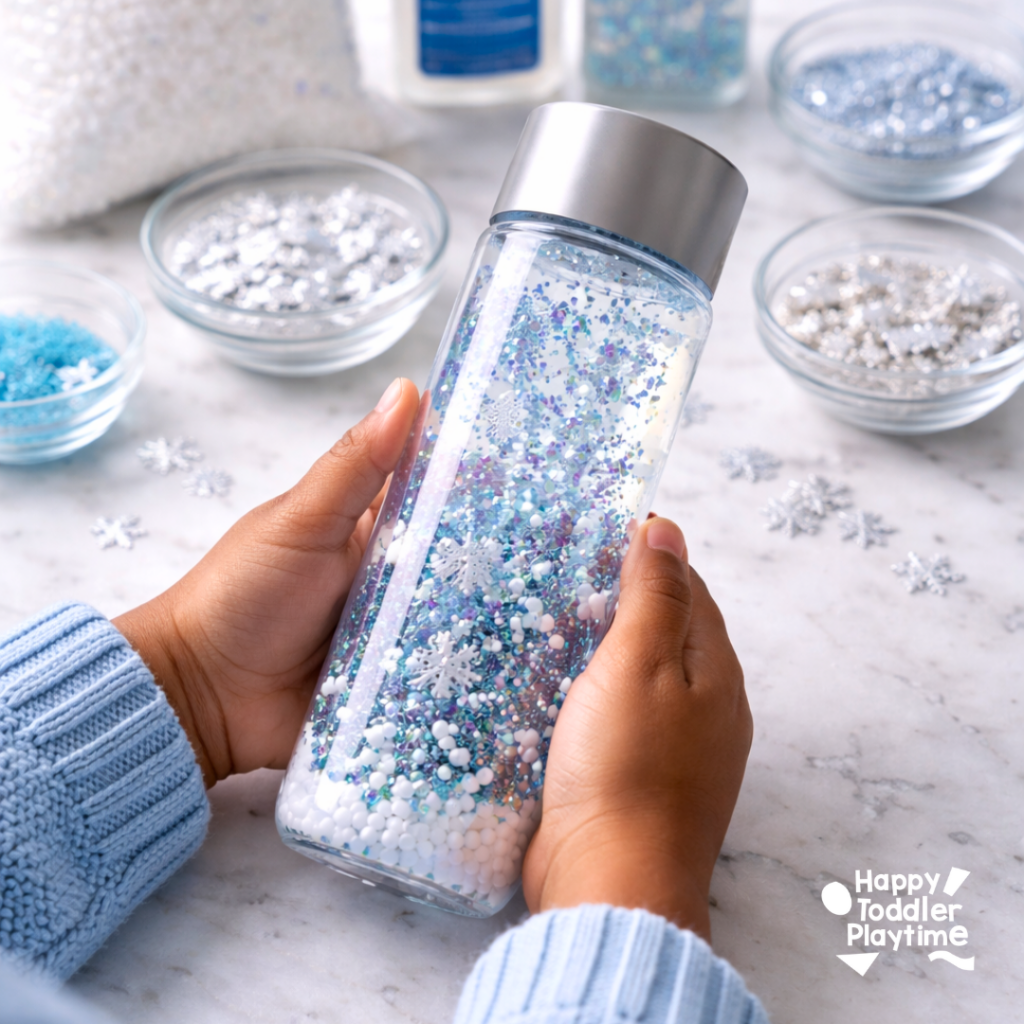
- Clear plastic bottles with tight lids (recycled VOSS water bottles work great)
- Warm water
- Clear glue or glycerin (optional, for slower movement)
- Glitter, snowflake sequins, beads, or confetti
- White, silver, and blue glitter
- Mini white foam beads (optional)
- Super glue or strong tape (to seal lids)
How to Make a Snowman Winter Sensory Bottle

This one is always a favorite because it feels playful and familiar.
Materials
- Black and orange felt
- Red Ribbon
- Clear bottle
- Water
- Clear glue or glycerin
- White glitter (fine and chunky)
- White sequins or bead
How to Make It
Fill the bottle about three-quarters full with warm water. Fill almost to the top with clear glue (or glycerin if you have it) to slow everything down. Drop in plenty of white snowflake sequins and white glitter. Top off with water, seal tightly, and shake gently. Cut small black dots from black felt for the eyes and buttons and cut an orange triangle from felt. Glue them on to the outside of the sensory bottle to create the face of the snowman. Wrap the red ribbon under the smile for scarf. When kids flip the bottle, the snowman pieces float and tumble like they’re in a snow globe.
Play Tip: Ask kids what the snowman is doing—falling, floating, hiding. It’s great for storytelling and language development.
How to Make an All-White and Silver Blizzard Bottle
This bottle is simple, elegant, and incredibly calming. It’s my go-to for quiet time.
Materials
- Clear bottle
- Water
- Clear glue or glycerin
- Silver glitter (fine and chunky)
- White sequins or beads
How to Make It
Add water and glue to the bottle, then sprinkle in the silver and white elements. Seal and shake. The result is a slow, swirling blizzard that kids can watch again and again. The neutral colors make this one especially soothing.
Real-Life Use: This bottle lives in our calm-down space and gets used when emotions run big or bodies need to slow down.
How to Make a Blue and Silver Winter Bottle
This version feels icy and magical without being over-the-top.
Materials
- Clear bottle
- Water
- Clear glue
- Blue glitter
- Silver beads or sequins
How to Make It
Combine water and glue, then add blue and silver materials. Shake gently and adjust the glue if needed to slow the movement. This bottle looks especially pretty in sunlight.
Variation: Add a tiny plastic snowflake or bead shaped like a star for extra interest.
Tips for Success
- Always seal lids with super glue or tape
- Test movement before giving it to kids—add more glue if needed
- Less is more; too much filler makes bottles cloudy
- Store upright when not in use
Winter sensory bottles are one of those activities that quietly become part of your routine. They don’t demand attention, but they invite it—and on long winter days, that’s exactly what you want.
Play2Learn Toddler & Preschool Programs for Curious Toddlers
There is no limit to your toddler’s energy and curiosity. That energy and curiosity although a joy can be challenging at times. Their interest in just about everything around them is what makes them great learners. One and two year olds can soak up so much just from their senses!
But as a teacher or parent that thirst for learning can be exhausting. That is why I created this toddler and preschooler program. To help you get the most out of this time with your curious toddler without having to come up with creative ways to play and interact with them.
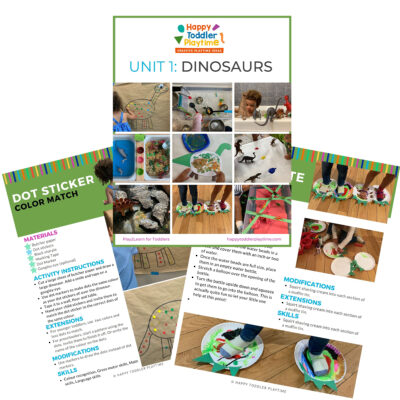
Play2Learn for Toddlers includes 20 Units for toddlers. Each 2-week toddler unit has 20 super easy to set up and engaging activities for toddlers 18 months to 3 years.
Play2Learn Preschool which includes 20 Units for preschoolers. Each 2-week preschoolers unit has 20 unique and easy to set up and engaging activities for preschoolers 3 years to 5 years. That’s over 800 learning activities for your toddler and preschooler at your fingertips! So many ideas you and your child will never be bored again!
These toddler and preschool lesson plans and activities will definitely keep you and your toddler and preschooler busy playing and learning!
Click here for more information: Play2Learn
Book: Exciting Sensory Bins for Curious Kids
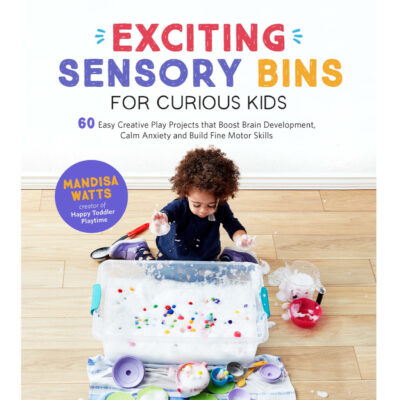
Did you know I wrote a book of sensory bins? Click here for more information Exciting Sensory Bin for Curious Kids. Or grab your copy at Amazon.
Boring afternoons are made exciting with awesome animal-based bins, like Salty Shark Bay or Yarn Farm. Pretend play bins like Birthday Cake Sensory Play or Bubble Tea Party encourage creativity and imagination. And your kids will have so much fun they won’t even know they’re getting smarter with STEAM (science, technology, engineering, art and math) activities like Sink or Float Soup, Magnetic Letter Hunt or Ice Cream Scoop and Count.
Designed for toddlers 18 months and up.
Book: Super STEAM Activity Book for Kids
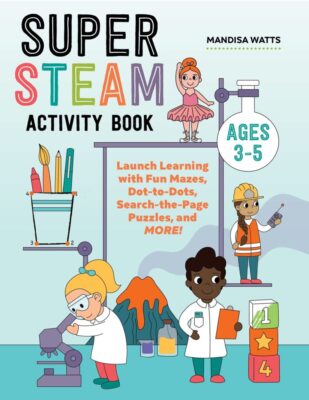
Learning all about science, technology, engineering, art, and math sets kids up for scholastic success―and it can be so much fun! Watch kids enjoy building STEAM skills as they color friendly fish, help water find its way to tree roots, solve math problems with mazes, and more.
Find out more and grab your copy here.
Designed for preschoolers 3 years old and up.
Book: Big Book of Riddles for Kids
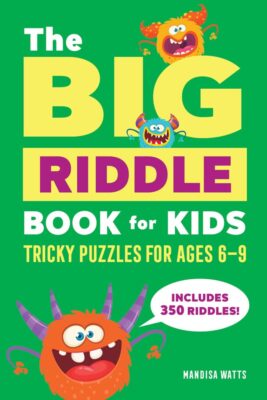
Riddle me this: What’s an exciting way to practice critical thinking while having a blast? The Big Riddle Book for Kids, of course! From hilarious puns to tough brain teasers, kids can build problem-solving skills with hundreds of riddles tha. t show them how to think outside the box.
- 350 riddles for kids—Have hours of fun with riddles, puns and jokes, and math and logic puzzles that’ll get their wheels turning!
- Level up their skills—Riddles get trickier as kids progress through the book, challenging them as they get better at solving puzzles!
- Double-check their work—Kids can check their answers in the back of the book with a handy answer key.
Help children expand their minds while having fun with this puzzle book for kids!
Designed for kids ages 6 years old and up.
TV Show: Curious Crafting
I’m so excited to share my crafting TV show Curious Crafting which launched in July 2022 on TVOkids and TVOkids YouTube! Season 2 aired in August 2023! My show was also nominated in 2023 for Best Live Action Preschool Series by the Youth Media Alliance Awards of Excellence.
Curious Crafting Season 1 is also now airing in Australia on ABC! Watch it here!
Set in the ultimate crafting space, Curious Crafting is a short form pre-school age series about the joy of making crafts. I lead a rotating cast of adorable little preschoolers (including my own) making magic out of common household objects.
In each episode we transform recycled items into magical crafts like a milk carton school bus, paper bag puppet or cotton pad turtle. The crafters learn and laugh their way through each activity while demonstrating what their young imaginations can create.
Curious Crafting shares the adventure and joy of making art with takeaway lessons for creating crafts at home.
This show designed for toddlers and preschoolers 2.5 years old and up.