
Easy no and low-prep activities for 1 year olds. Updated 2026.
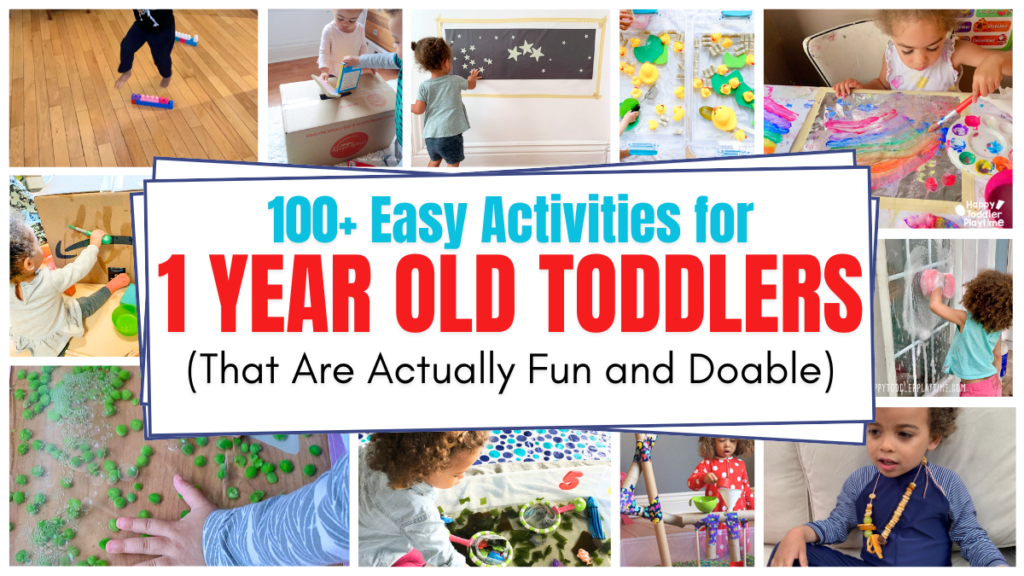
As a mom of twin toddlers I can tell that you having easy low and even no-prep activities to do with my toddlers was essential to my survival.
That is why I created this list of the 100+ easy toddler activities that I did with my toddlers. These are are realistic, screen-free, and totally doable — even if you’re running on zero sleep and coffee fumes.
Let’s be real: 1-year-olds are adorable, curious, and into everything.
They’re not quite babies, not quite toddlers — which means finding the right kind of play is tricky. These activities were made with that sweet spot in mind: easy enough to set up in 2 minutes, safe for little explorers, and fun for both of you.
Why You’ll Love These Activities for 1-Year-Olds
- Simple setup, big payoff. These aren’t complicated Pinterest projects — most use things you already have.
- Great for development. Boost fine motor skills, encourage sensory play, and support early language in a playful way.
- Open-ended + repeatable. Toddlers love doing the same thing again and again (and again) — and these are activities you won’t mind repeating.
- Realistic for busy days. Whether you have 5 minutes or an hour, you’ll find something that fits.
Let’s get those little hands moving and minds growing — without needing a craft closet full of supplies.
- Why You’ll Love These Activities for 1-Year-Olds
- 100+ Easy Activities for 1 Year Olds
- 1. Green Pea Sensory Bag
- 2. Feed the Ducks Sensory Bin
- 3. Puzzle Grab and Sort
- 4. Twinkle Little Star Sticky Wall
- 5. Two-Ingredient Taste Safe Finger Paint
- 6. Ice Rubber Ducks
- 7. Ring Grab and Sort
- 8. Easy Cardboard DIY Busy Board
- 9. Book Drop Toddler Activity
- 10. Mega Blok Jumping
- 11. Snowball Pick Up
- 12. Cardboard Tube Sticky Wall
- 13. Egg or Ball Rescue
- 14. Window Washing
- 15. Foil Puzzle Presents
- 16. The Drop Anything Sensory Bin
- 17. Vegetable Soup Bath
- 18. Foil Painting
- 19. Green Pea Transfer
- 20. Bunny Sticky Wall
- 21. Yellow Rubber Ducky Sensory Bin
- 22. Playing with a Salad Spinner
- 23. Snack Necklaces
- 24. Tape Rescue
- 25. Balloon Ball Pit
- 26. Pouch Lid Drop
- 27. Post-it Push
- 28. Under the Sea Sensory Bin
- 29. Farm Sensory & Discovery Bag
- 30. Cloudy Day Sticky Wall
- 31. Water Table and Pom Poms
- 32. Free the Musical Instruments
- 33. Corn Sensory Bin
- 34. Bubble Wrap Rainbow Stomp Painting
- 35. Egg or Ball Balance
- 36. Painting with Water
- 37. Color Sorting Box with Popsicle Sticks
- 38. Mushy Green Pea Sensory Bin
- 39. Drop the Acorns
- 40. Flower Tea Party Sensory Bin
- 41. Super Easy DIY Edible Paint Recipe
- 42. Construction Site Ice Painting
- 43. Cotton Pad Art Water Table
- 44. Frozen Flower Bombs
- 45. Pool Noodle Boats
- 46. Fizzy Jungle
- 47. Bubble Foam Sensory Bin
- 48. Pom Pom Tape Spider Web
- 49. Shape Grab and Sort
- 50. Playing with Colored Rice
- 51. Mega Blok Painting
- 52. Ice Treasure Hunt
- 53. Pom Pom Water Sensory Bin
- 54. Tubes & Rainbow Rice Sensory Bin
- 55. Frozen LEGO
- 56. Playing with a Spray Bottle
- 57. Feed the Fish Colour Sort
- 58. Feed the Squirrel
- 59. Cereal Sensory Bin
- 60. Ball Drop
- 61. Button Match
- 62. Oats Sensory Bin
- 63. DIY Lid Drop Box
- 64. LEGO Duplo Car Wash
- 65. Pipe Cleaner Lacing
- 66. Ball Wash
- 67. Pom Pom Drop
- 68. Mega Blok Wash
- 69. Pom Pom Sensory Bin
- 70. Bubble Wrap Road
- 71. Painting Ice Cubes
- 72. Frozen Pom Poms
- 73. Taste-Safe Bubble Foam
- 74. Birdseed Kitchen Sensory Bin
- 75. Ball Painting
- 76. Tube Pattern Matching
- 77. Magna-Tile Colour Sorting Boxes
- 78. Water Table Kitchen
- 79. Paint the Toys
- 80. DIY obstacle course
- 81. Rubber Duck Pond Sensory Bag
- 82. Dried Pasta Sensory Bin
- 83. Sensory Bin with Shaving Cream
- 84. Mega Blok Rescue
- 85. Feed and Wash the Animals
- 86. Fruit Sensory Water Play
- 87. Magna Tile Cap Drop
- 88. DIY Flip Book
- 89. Sensory bin with shredded paper
- 90. Easter Egg Puzzle Activity
- 91. Painting Bread
- 92. Hand Sock Painting
- 93. Cardboard Tube Bowling
- 94. Shredded Paper Garden Sensory Bin
- 95. Water Transfer Activity
- 96. Spaghetti Drop Activity
- 97. Muffin Tin Veggie Sort
- 98. Discovery Bin Activity
- 99. Wine Cork Push Activity
- 100. Jumbo Pasta Sensory Bin
- 101. Cardboard Box Tunnel
- Playing Safely
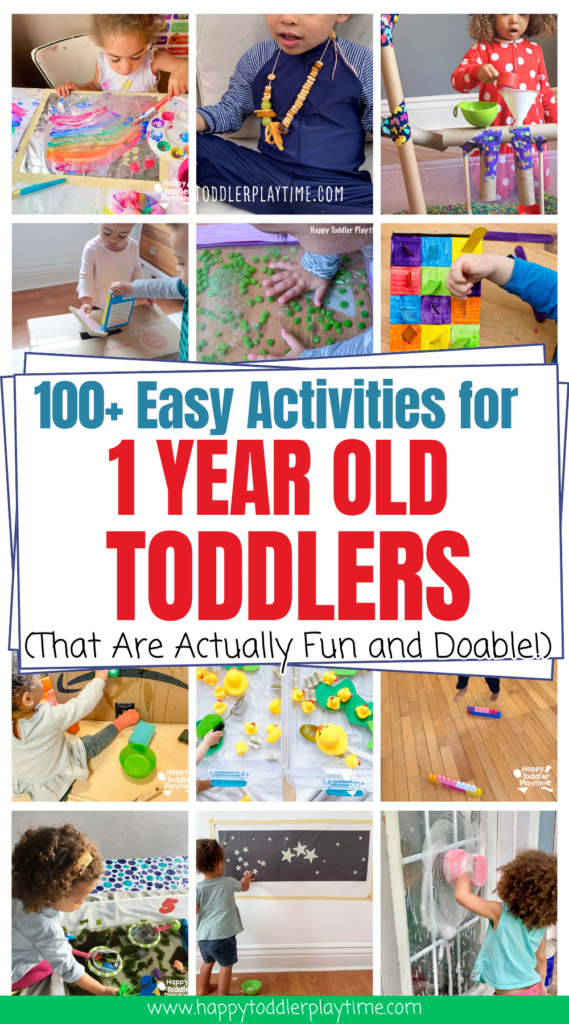
100+ Easy Activities for 1 Year Olds
Alright, the fun part—the activities for your one-year-old! I’m excited to share these fun and simple to set up activities that I did with my toddlers! I am positive they will become your new go-to activities as well.
1. Green Pea Sensory Bag

Materials Needed
- A bag of frozen green peas
- A sturdy, sealable plastic bag (like a Ziploc)
- Clear packing tape (optional, for extra security)
Quick Setup:
Grab a bag of frozen green peas and pour them into a sturdy, sealable plastic bag, making sure to squeeze out all the air before sealing it tightly. For added security against any enthusiastic squishing, you might want to seal the edges with clear packing tape. This simple setup creates a cool, squishy sensory experience that’s perfect for little hands to explore. The peas move around under their fingers, providing tactile feedback and visual stimulation as they press and poke the bag.
RELATED: 45+ Sensory Bags for 1 Year Olds
2. Feed the Ducks Sensory Bin

Materials Needed:
- Sensory bin
- Water
- Yellow rubber ducks
- Corks
- Green foam cut into the shape of lily pads
- Slotted spoons
- Strainers
Quick Setup:
Fill the sensory bin with water to a safe level where your toddler can reach in without any risk of falling. Add the yellow rubber ducks, corks, and green foam lily pads to the water. Spread them out to allow for lots of interaction. Place the slotted spoons and strainers next to the bin to let your one year old scoop and explore the items in the water and pretend to feed the ducks the cork. Encourage your little one to discover how the different objects float and move in the water, and use the tools to fish out their favorites.

3. Puzzle Grab and Sort

Materials Needed:
- Contact paper
- Painters tape
- Wooden puzzle pieces
- Puzzle board
Quick Setup:
Stretch the contact paper across the puzzle board with the sticky side facing out and secure it with painters tape along the edges. Place the puzzle pieces onto the sticky surface. This setup is perfect for encouraging your little one to challenge their fine motor skills by pulling pieces off and solving the puzzle.
4. Twinkle Little Star Sticky Wall

Materials Needed:
- Black construction paper
- Painters tape
- Contact paper
- Plastic glow-in-the-dark stars
Quick Setup:
Cover a wall section with black construction paper using painters tape to hold it in place. Overlay a sheet of contact paper with the sticky side out, and fix it over the black paper. Invite 1 year old to stick the glow-in-the-dark stars on the sticky surface for a sensory activity that lights up in the dark, aiding in visual and spatial development.

5. Two-Ingredient Taste Safe Finger Paint

Materials Needed:
- Whipping cream
- Food coloring
- Corks
Quick Setup:
Mix food coloring into the whipping cream to create bright, edible paints. Lay out some paper, give your toddler corks or let them use their fingers, and let them go wild with their colorful creations. This activity is great for sensory play and encourages creative expression in a safe, taste-friendly way.
6. Ice Rubber Ducks

Materials Needed:
- Ice cube trays
- Rubber ducks
- Blue food coloring
- Tray or sensory bin
Quick Setup:
Fill the trays with water, and place a rubber duck in each section. Freeze until solid. Once ready, place the ice blocks with ducks in a tray or sensory bin, add a drop of blue food coloring for your one year old to explore. This is perfect for sensory learning and understanding temperature and melting.
7. Ring Grab and Sort

Materials Needed:
- Contact paper
- Painters tape
- Plastic sorting rings
- Tower for sorting
Quick Setup:
Attach a piece of contact paper to a wall or vertical surface with the sticky side out using painters tape. Hand over the plastic rings to your toddler to stick and remove from the contact paper and then sort them onto a nearby sorting tower. This activity encourages motor skill development and cognitive skills like sorting and categorizing.
8. Easy Cardboard DIY Busy Board

Materials Needed:
- Large piece of cardboard
- Variety of safe household items (e.g., old remote, calculator, old keys, light switches, zippers, wheels, buttons, textured fabrics, foil packaging)
- Strong glue or duct tape
- Non-toxic paint (optional)
Quick Setup:
Start by painting the cardboard in a bright, engaging color to serve as the background of your busy board (optional). Allow it to dry completely. Arrange a variety of tactile and interactive items such as old keys, light switches, zippers, and wheels on the cardboard. Once you’re satisfied with the layout, securely attach each item using strong glue or duct tape to ensure they are firmly in place and won’t pose a choking hazard. This busy board offers a plethora of activities that help develop fine motor skills, cognitive abilities, and sensory processing as toddlers explore each element with curiosity.
9. Book Drop Toddler Activity

Materials Needed:
- A variety of sturdy board books or soft books
- A cardboard box
- Scissors
- Colorful tape (optional)
Quick Setup:
Choose a simple, cardboard box, cut a rectangular hole on the top similar in size to your board books. if you like, decorate it with colorful tape to make it visually appealing (have your toddler help!). Gather a selection of board books or soft books and place them next to the box. Encourage your toddler to pick up each book and drop it into the bin. This activity is fantastic for teaching cause and effect, and it helps develop fine motor skills as your little one grasps and releases the books. Plus, it’s a fun way for them to interact with their little library!
10. Mega Blok Jumping


Materials Needed:
- Mega Bloks or any large, lightweight building blocks
- Clear floor space
Quick Setup:
Use the Mega Bloks to create a small “obstacle course” on a clear area of the floor. Build simple structures such as low walls, towers, and paths that your toddler can navigate around. Encourage your toddler to jump over the low walls, walk along the paths, and step around or over the towers. This activity not only promotes physical exercise but also helps develop your toddler’s gross motor skills, balance, and coordination.
11. Snowball Pick Up

Materials Needed:
- Cardboard box
- Tongs
- Cotton balls
Quick Setup:
Place a cardboard box on the floor and scatter cotton balls just outside the box within arms reach, which will represent snowballs. Provide your toddler with a pair of tongs and invite them to get into box. Show them how to use the tongs to pick up the cotton balls and transfer them into the box to another container or area on the floor. This activity helps develop fine motor skills as your one year old practices grasping and releasing with the tongs. It’s also a great way for them to improve their hand-eye coordination and dexterity.
12. Cardboard Tube Sticky Wall


Materials Needed:
- Contact paper
- Painters tape
- Cardboard tubes (from paper towels, toilet paper, etc.)
Quick Setup:
Begin by cutting the cardboard tubes into various lengths. Next, attach the contact paper to a wall or flat surface with the sticky side facing out, using painters tape to secure the edges. Now, hand the cardboard tube pieces to your toddler and encourage them to stick them onto the contact paper in whatever patterns or designs they like. This activity not only fosters creativity but also enhances fine motor skills as they manipulate the tubes and explore their tactile senses.
13. Egg or Ball Rescue

Materials Needed:
- Sensory bin
- Painters tape
- Ball pit balls or plastic Easter eggs
- Colorful bowls
- Large spoon
Quick Setup:
First, secure the painters tape across the sensory bin to create different sections—these will serve as sorting areas for the balls or eggs. Fill the bin with ball pit balls or plastic Easter eggs in various colors. Place the colorful bowls around the bin or at a distance to match the colors of the balls or eggs. Hand your toddler a large spoon and encourage them to scoop the balls or eggs and sort them into the corresponding colored bowls. This activity is fantastic for teaching color recognition and improving fine motor skills as well as hand-eye coordination.

14. Window Washing

Materials Needed:
- Sensory bin table or large bin
- Soapy water
- Large sponges
- Outdoor window
Quick Setup:
Fill your sensory bin or a large bin with warm soapy water. Provide your toddler with a large sponge that’s easy for their little hands to grasp. Take them to an outdoor window that’s within their reach, and show them how to dip the sponge into the soapy water and then scrub the window. This activity not only gives them a sense of participating in household chores but also enhances their motor skills through scrubbing and wiping motions. Additionally, the sensory experience of soapy water and the physical activity involved can be both stimulating and enjoyable for your toddler.
15. Foil Puzzle Presents

Materials Needed:
- Aluminum foil
- Small toys or puzzle pieces
Quick Setup:
Begin by selecting a few small toys or puzzle pieces that are safe and suitable for your toddler. Wrap each item individually in aluminum foil, making sure they are fully covered. Spread out the foil-wrapped items on the floor or in a shallow box and invite your toddler to unwrap them. This activity is excellent for fine motor skill development as your child works to peel away the foil, and it also adds an element of surprise and discovery to their play.
16. The Drop Anything Sensory Bin

Materials Needed:
- Sensory bin
- Cardboard tubes
- Tape
- Various small objects (corks, markers, popsicle sticks)
Quick Setup:
Begin by securely taping various lengths of cardboard tubes to the inside walls of the sensory bin. Ensure that the tubes are affixed in a way that they can funnel objects from the top and let them drop out at different points within the bin. Once your tube setup is complete, provide your toddler with a selection of small objects such as corks, markers, and popsicle sticks. Show them how to drop these items into the tubes and watch them navigate through the makeshift maze to the bottom. This activity is fantastic for developing hand-eye coordination and problem-solving skills, as they figure out which items fit down which tubes.
17. Vegetable Soup Bath

Materials Needed:
- Variety of plastic vegetables
- Bowls, pots, and pans
- Spoons
- Bathtub filled with water
Quick Setup:
Fill the bathtub with warm water to create a fun and inviting bath environment. Add several plastic vegetables to the bath, along with child-safe bowls, pots, and pans, and some large spoons for stirring. Encourage your toddler to ‘cook’ by mixing the vegetables in the pots and transferring them between different containers using the spoons. This activity turns bath time into an imaginative play session, where your child can pretend to make vegetable soup, enhancing both creative thinking and fine motor skills.
18. Foil Painting

Materials Needed:
- Aluminum foil
- Printer paper
- Non-toxic paint
- Paintbrushes or sponges
- Tape
Quick Setup:
Tape aluminum foil to the table. Set out a few colors of non-toxic paint along with brushes or sponges. Invite your toddler to paint directly on the foil, experiencing the unique texture and reflective effects that the foil adds to their artwork. Once done, press a sheet of paper onto the foil to print the picture on paper. This activity not only enhances creativity but also offers a novel sensory experience, as the paint moves differently on foil compared to regular paper.

19. Green Pea Transfer

What You’ll Need:
- Sensory bin
- Frozen green peas
- Spoons
- Small containers, Tupperware, or bowls
Quick Setup:
Fill your sensory bin with a generous amount of frozen green peas. Place several small containers, Tupperware, or bowls around the bin or within reach of your child. Provide spoons suitable for their hands. The activity involves your child using the spoons to transfer peas from the sensory bin into the various containers. This task is great for developing fine motor skills as they scoop and manipulate the spoon, and it also encourages cognitive skills like sorting and counting as they may decide to sort the peas by quantity or even by size if there are slight variations. The cold touch of the frozen peas adds a sensory element that is both stimulating and a unique tactile experience for young children.

20. Bunny Sticky Wall

Materials Needed:
- Contact paper
- Painters tape
- Black marker
- Cotton balls
Quick Setup:
Start by drawing a simple outline of a bunny on the contact paper using the black marker. You can make it as big or as small as you like, depending on the space available. Next, affix the contact paper to a wall or any vertical surface with the sticky side facing out, securing it firmly with painters tape around the edges. Provide your toddler with a pile of cotton balls and encourage them to stick them along the bunny outline to fill it in. This activity is great for developing fine motor skills as little hands pick up and place the cotton balls, and it also encourages creativity and sensory exploration.
21. Yellow Rubber Ducky Sensory Bin

Materials Needed:
- Yellow food coloring
- Water
- Sensory bin
- Yellow rubber ducks
- Slotted spoons
Quick Setup:
Fill your sensory bin with water and add a few drops of yellow food coloring to achieve a bright, cheerful yellow hue. Place several yellow rubber ducks in the water. Provide slotted spoons for your toddler to use, allowing them to scoop and catch the ducks as they float around. This simple setup not only makes for a visually appealing activity but also encourages motor skill development and hand-eye coordination as children attempt to scoop up the ducks with the spoons.
22. Playing with a Salad Spinner


Materials Needed:
- Salad spinner
- Pouch caps or small, lightweight objects
- Water and soap (optional for a bubbly effect)
Quick Setup:
Place the salad spinner on the floor or a stable, flat surface and open the top. If using pouch caps, have your toddler fill the basket with them. Alternatively, you can create a bubbly sensory experience by adding a small amount of water and a squirt of soap into the spinner. Show your toddler how to push down on the spinner handle or turn it, depending on the model. As they spin, they’ll be delighted by the whirling motion and, if using soap, the creation of bubbles. This activity is excellent for teaching cause and effect, as well as improving hand coordination and strength.
23. Snack Necklaces


Materials Needed:
- String or yarn (ensure it’s safe for children)
- Scissors
- Plastic embroidery needles
- Edible items with holes or that can be easily pierced, such as pretzels, cereal loops, dried apple rings, or gummy rings
Quick Setup:
Cut the string or yarn to a length that will comfortably fit over your child’s head once tied. Tape one end of the string to make it stiff, which will act like a needle and make threading easier or use a plastic embroidery needle. Lay out the edible items on a plate or tray and demonstrate to your toddler how to thread them onto the string. Once they have added enough items to make a full necklace, help them tie the ends together securely. This activity is great for fine motor development as kids practice their threading skills, and it also offers a tasty treat they can enjoy later.

24. Tape Rescue


Materials Needed:
- Washi tape
- Ball pit balls or plastic Easter eggs
- Colorful bowls for sorting
Quick Setup:
Start by taping the ball pit balls or plastic Easter eggs to a flat surface like a table or a large tray using Washi tape. Create a criss-cross pattern over each ball or egg to secure them down, but ensure the tape is not too tightly wrapped so your toddler can pull them free. Place the colorful bowls nearby, assigning each bowl a color that matches the balls or eggs. Encourage your toddler to rescue the taped items by peeling off the tape and then sorting them into the corresponding colored bowls. This activity is excellent for developing fine motor skills as your child works to remove the tape, and it also teaches color recognition and sorting skills.
25. Balloon Ball Pit


Materials Needed:
- Ballons
- Sensory Bin
Quick Setup:
Start by blowing up several balloons in different colors. Place them in a sensory bin. Allow you toddler to discover them! Super easy. My twin toddlers loved this one.

26. Pouch Lid Drop


Materials Needed:
- Cardboard tubes (from paper towel or toilet paper rolls)
- Pouch lids (from baby food pouches or similar)
- Painters tape
Quick Setup:
Begin by using painters tape to attach several cardboard tubes vertically to a wall or the side of a large furniture item like a bookshelf. Make sure the tubes are securely fastened and at a height accessible to your toddler. Next, give your toddler the collection of pouch lids. Show them how to drop the lids into the tops of the tubes and watch them as they travel down and emerge at the bottom. This activity encourages fine motor skills and hand-eye coordination as they manipulate the small lids and aim them into the tubes. It’s also great for teaching cause and effect, as toddlers see the immediate results of their actions.
27. Post-it Push


Materials Needed:
- Post-It notes
- Diaper wipes box (empty)
Quick Setup:
Start by sticking several Post-It notes on the wall. Leave the top of the box slightly open or remove the lid if possible. Show your toddler how to grab the post its notes from the wall and then push the Post-It notes through the slot where wipes typically come out. This simple action helps develop fine motor skills as they manipulate the small, lightweight papers and aim to get them into the box. The tactile feedback of the sticky notes and the soft resistance of the box slot make this a delightful sensory experience.
28. Under the Sea Sensory Bin

Materials Needed:
- Sensory bin
- Water
- Dried seaweed
- Plastic fish and under-the-sea creatures (such as starfish, crabs, and octopuses)
Quick Setup:
Fill the sensory bin with water to create an ocean-like environment. Add the dried seaweed to the water, allowing it to spread and float to enhance the undersea effect. Introduce various plastic under-the-sea creatures into the bin, placing them among the seaweed and on the bottom. This setup invites your toddler to dive into an imaginative play session, exploring the textures of the seaweed and the shapes and colors of the sea creatures. The water adds an extra layer of sensory experience, making the creatures seem as if they are swimming in the sea.

29. Farm Sensory & Discovery Bag

Materials Needed:
- Large Ziplock bag
- Bird seed
- Wooden farm animal puzzle pieces
- Packing tape
Quick Setup:
Start by filling the large Ziplock bag with bird seed, which will serve as your base. Next, place several wooden farm animal puzzle pieces into the bag. These can include shapes like cows, chickens, pigs, and horses, adding a variety of textures and visual interest. Once all items are in the bag, seal it tightly, ensuring that it’s secure. Go over the seal with packing tape for extra security to prevent any spills. This sensory and discovery bag allows toddlers to manipulate the contents through the bag, feeling the shapes and textures of the puzzle pieces mixed with the bird seed without any mess.
30. Cloudy Day Sticky Wall

Materials Needed:
- Contact paper
- Blue and yellow construction paper
- Painters tape
- Cotton balls
Quick Setup:
Begin by taping blue construction paper and sun shapes from the yellow construction paper to the wall. Next, unroll a large piece of contact paper and carefully remove the backing to expose the sticky side. Use painters tape to secure the contact paper to a wall, sticky side facing out over the sky and sun. Provide a pile of cotton balls, which your toddler can stick onto the sky. This activity encourages creative expression as children decorate their cloudy day scene, and it’s great for developing fine motor skills as they handle the small cotton balls and delicate paper pieces.
31. Water Table and Pom Poms

Materials Needed:
- Water table or large shallow bin
- Water
- Pom poms (preferably large and colorful)
- Various scooping tools (such as cups, spoons, or small nets)
Quick Setup:
Fill your water table or a large shallow bin with water. Add a generous amount of colorful pom poms to the water. These will float and provide a visually appealing element for toddlers to interact with. Provide your toddler with various scooping tools like cups, spoons, or small nets to enhance the play experience. Encourage your one-year old to scoop, catch, and play with the pom poms using the tools provided. This activity not only allows for sensory exploration of different textures and weights as pom poms absorb water and change their buoyancy, but it also helps develop fine motor skills and hand-eye coordination.
32. Free the Musical Instruments
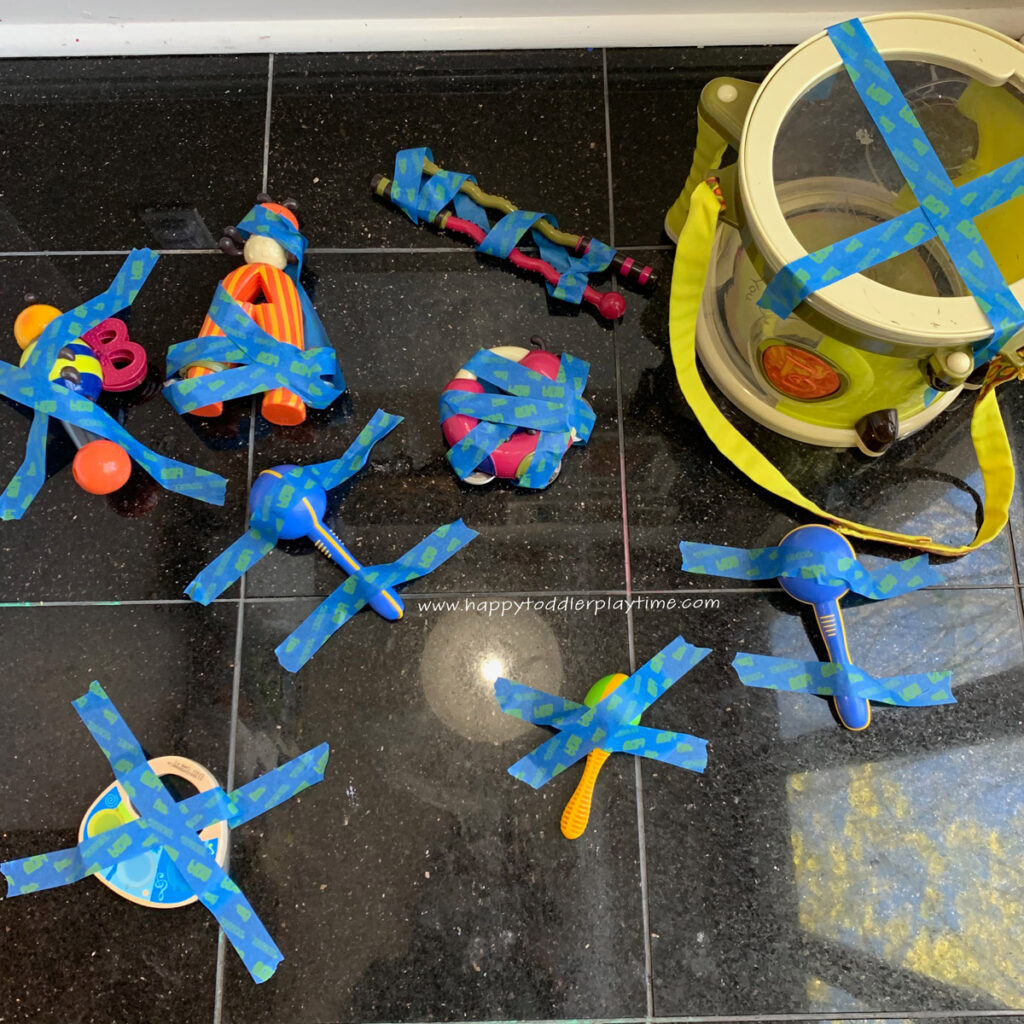
Materials Needed:
- Musical instruments
- Masking tape
Quick Setup:
Tape your musical instruments to the floor. Invite your toddler to free them and then start making music!
33. Corn Sensory Bin

Materials Needed:
- Sensory bin or large container
- Frozen corn kernels
- Water
Quick Setup:
Fill your sensory bin with a generous amount of frozen corn kernels. Add cold water to the bin, enough to partially submerge the corn. The addition of water will gradually thaw the corn, providing an interesting sensory contrast between the cold, hard kernels and the eventual softness as they warm up. This setup allows children to experience changes in texture and temperature, enhancing their sensory exploration. Encourage them to scoop, pour, and feel the corn with their hands, which promotes fine motor skills and provides a cooling play activity, especially beneficial on warm days.
34. Bubble Wrap Rainbow Stomp Painting

What You’ll Need:
- Bubble wrap
- Non-toxic washable paint (multiple colors)
- Large sheets of paper or a roll of butcher paper
- Tape
- Old clothes or a smock for your child
Quick Setup:
Start by taping a large sheet of paper or butcher paper to a flat surface, like the floor or a long table. Cut pieces of bubble wrap to fit over your toddler’s feet. Tape them around your one-ears bare feet. Hold their hands to help avoid slipping. Squirt different colors of paint onto the paper in a random or patterned design, creating a rainbow effect. Dress your child in old clothes or a smock. Let them step onto the paper with their bubble wrap feet and start stomping, walking, or even dancing to burst the bubbles and spread the paint around. The pressure from their movements will transfer colorful paint patterns onto the paper beneath, creating a vibrant, textured masterpiece.
35. Egg or Ball Balance

Materials Needed:
- Ball pit balls or plastic Easter eggs
- Cardboard tubes (from paper towel or toilet paper rolls)
Quick Setup:
Collect several cardboard tubes and stand them upright on a flat surface, like a table or the floor. You might need to cut the tubes to different lengths for varied difficulty levels. Place the ball pit balls or plastic Easter eggs near the base of each tube. The challenge for your child is to balance each ball or egg on top of the tubes without letting them fall off. This requires careful coordination and gentle handling, making it a great exercise for developing fine motor skills and patience.
36. Painting with Water

What You’ll Need:
- Construction paper (blue works best)
- Paintbrushes or cotton balls or sponges
- Bowl
- Water
Quick Setup:
Begin by setting up a workspace for your child, ideally outdoors if weather permits, or on a surface that’s easy to clean. Lay out sheets of blue construction paper or a flatten or regular cardboard box to use as a canvas. Fill a bowl with water and provide your toddler with paintbrushes or cotton balls to use as painting tools. Show them how to dip their brush or cotton balls into the water and then “paint” on the paper or cardboard. The water will darken the paper where it’s applied, creating a “wet effect” that visually resembles actual paint. As the paper dries, the designs will fade, allowing for endless opportunities to create new artwork.

37. Color Sorting Box with Popsicle Sticks

What You’ll Need:
- Large craft sticks
- Markers
- Shoe box
Quick Setup:
Start by coloring each end of the large craft sticks with different colors using markers. You can use a range of colors depending on how challenging you want the sorting activity to be. Next, cut slits in the lid of the shoe box, ensuring each slit is wide enough to fit a craft stick. Label each slit with a color that corresponds to the colors on the craft sticks. Your child can then match the color on the stick to the labeled slit and insert the stick into the correct slot. This activity is excellent for teaching color recognition and improving fine motor skills.
38. Mushy Green Pea Sensory Bin

What You’ll Need:
- Sensory bin
- Frozen green peas
- Water
Quick Setup:
Fill your sensory bin with frozen green peas. Add enough water to slightly cover the peas. Let the peas thaw in the water, which creates a mushy texture for sensory play. This setup invites your one year old to scoop, mash, and explore the peas with their hands or with tools like spoons or cups. This activity is fantastic for sensory exploration as it allows children to feel the textures change from solid, icy peas to soft, mushy ones. It’s also a great way for them to develop fine motor skills and hand-eye coordination while engaging in creative, messy play.
39. Drop the Acorns

What You’ll Need:
- Acorns (or Pom Poms)
- Cardboard box
- Scissors
- Tongs
Quick Setup:
Begin by using the scissors to carefully cut holes in the top of the cardboard box, each large enough for an acorn or pom pom to pass through. Additionally, cut an entrance on one side of the box to allow your toddler to reach in and retrieve the acorns or pom poms later. Distribute the acorns or pom poms along with a pair of tongs to your child. Encourage them to use the tongs to pick up each acorn or pom pom and drop it through the holes. This activity helps develop fine motor skills through the use of tongs and provides a fun challenge in aiming and dropping the items through the holes. It’s also great for problem-solving as they figure out how to retrieve the items from inside the box.
40. Flower Tea Party Sensory Bin

What You’ll Need:
- Sensory bin
- Tea party set (teacups, teapot, plates)
- Artificial sunflowers or other safe flowers
- Water
- Food coloring (optional)
Quick Setup:
Fill your sensory bin with water, adding a few drops of food coloring if you want to create a more visually stimulating experience—yellow works well to mimic a sunny, cheerful environment. Arrange the tea party set within the bin, placing the teacups, teapot, and plates so they are partially submerged or floating. Scatter the artificial flowers around the bin to enhance the thematic feel of a garden tea party. Invite your toddler to host a tea party, pouring and serving ‘tea’ (the colored water), and enjoying imaginative play with the floating flowers and tea set. This activity encourages creative play, fine motor skills development, and sensory exploration, all within a delightfully thematic setup.
41. Super Easy DIY Edible Paint Recipe

What You’ll Need:
- Cornstarch
- Water
- Food coloring or natural coloring alternatives (beet juice, spinach juice, etc.)
- Small mixing bowls
- Whisk or spoon for stirring
- Paintbrushes
- White paper or edible paper (rice paper, wafer paper) for painting
Quick Setup:
Begin by mixing equal parts of cornstarch and water in small mixing bowls to create a smooth paste. Adjust the consistency as needed; if it’s too thick, add more water; if too runny, add more cornstarch. Once you have a smooth base, divide it among different bowls depending on how many colors you want to make. Add a few drops of food coloring or natural juice to each bowl to achieve your desired colors. Stir well with a whisk or spoon until the color is evenly distributed. Set out your paper or edible paper and paintbrushes, and let your child experiment with their homemade, non-toxic edible paint. This recipe is not only safe for young children who might be tempted to taste their art materials, but it also allows for creative play without worrying about stains or chemicals.
42. Construction Site Ice Painting

What You’ll Need:
- Ice cube tray
- Food coloring
- Small construction trucks
- Water
Quick Setup:
Start by filling the ice cube tray with water. Add a few drops of different colored food coloring to each compartment to create colorful ice cubes. Mix the colors gently to ensure they’re well distributed. Place the tray in the freezer and let the water freeze completely. Once the ice cubes are solid, pop them out of the tray and onto a large, flat surface that can get wet, such as a tray or a plastic tablecloth. Give your child the small construction trucks to push and maneuver the ice cubes around. As the ice melts, the colors will blend on the surface, creating a fun and colorful painting effect. This activity is not only a creative way to use construction trucks in play, but it also introduces concepts of color mixing and melting, making it educational as well as fun.

43. Cotton Pad Art Water Table

What You’ll Need:
- Water table or sensory bin
- Washable markers
- Cotton pads
- Water
Quick Setup:
Fill your water table or sensory bin with a shallow layer of water, just enough to allow the cotton pads to float without submerging completely. Hand out washable markers to your toddler and let them color on the cotton pads while they are dry. Encourage them to create various designs and patterns using different colors. Once they have finished decorating, place the colored cotton pads into the water. The children can then watch as the water begins to interact with the markers’ ink, creating beautiful watercolor effects. This activity encourages creativity and provides a fantastic visual display of how colors mix and spread on a different medium. It’s also a great opportunity for sensory play, combining the tactile experience of the cotton pads with the visual stimulation of changing colors.

44. Frozen Flower Bombs

What You’ll Need:
- Reusable water balloons or an ice cube tray
- Water
- Faded flowers
- Freezer
Quick Setup:
Begin by placing a few faded flower petals inside each compartment of your reusable water balloons or ice cube tray. If using an ice cube tray, you can arrange the petals to create visually appealing patterns. Fill each compartment with water, ensuring that the flowers are completely submerged. Carefully place the tray or balloons into the freezer and leave them overnight to freeze completely. Once frozen, remove the flower bombs from their molds. These can be used for sensory play, especially on a warm day, where toddlers can watch the ice melt and flowers emerge, or they can use the frozen flower bombs for gentle play in a pool or during a water table activity, observing how ice interacts with water and the environment. This activity not only offers sensory stimulation but also teaches children about the properties of water and ice and the natural beauty of flowers.
45. Pool Noodle Boats


What You’ll Need:
- Pool noodles
- Scissors or a knife (for adult use only)
- Toothpicks or small sticks
- Paper or fabric (for sails)
- Permanent markers or stickers for decoration
Quick Setup:
Start by cutting the pool noodles into sections about 3 inches sections, using scissors or a knife (adults only). These sections will serve as the boat hulls. . For the sails, cut triangles from paper or fabric. Attach each sail to a toothpick or small stick, then insert it into the pool noodle section. Once all the boats are assembled, fill a water table, bathtub, or even a small pool with water and let the children float their noodle boats. This activity is great for teaching basic principles of buoyancy and engineering, while also allowing kids to engage in creative play and water play simultaneously.
46. Fizzy Jungle

What You’ll Need:
- Tray or sensory bin
- Baking soda
- Vinegar
- Eye droppers
- Jungle animal figurines
- Rocks, sticks, and leaves
- Green food coloring (optional)
Quick Setup:
Begin by covering the bottom of your tray or sensory bin with a generous layer of baking soda. If you want to add an extra touch of the jungle, mix some green food coloring into the vinegar before the activity starts. Place various jungle animal figurines, rocks, sticks, and leaves on top of the baking soda to create a jungle scene. Fill several small containers with the colored vinegar and provide eye droppers for your toddler. Invite them to use the eye droppers to squirt vinegar onto the baking soda.

47. Bubble Foam Sensory Bin


- What You’ll Need:
- Large bin or container
- Dish soap
- Water
- Hand mixer or whisk
- Food coloring (optional)
- Toys or utensils for playing (optional)
Quick Setup:
Start by filling your bin about a quarter full with water and add a generous squirt of dish soap. If you want to add a splash of color, mix in a few drops of food coloring. Use a hand mixer or whisk to whip the mixture until you get thick, fluffy foam. Once your bubble foam is ready, you can place a few waterproof toys or utensils in the bin for your child to explore with. This sensory bin activity is perfect for tactile exploration and can keep little ones entertained with the fascinating textures and visual appeal of colorful foam.

48. Pom Pom Tape Spider Web

What You’ll Need:
- Masking or painters tape
- Pom Poms
- A doorway or large empty wall space
Quick Setup:
Choose a doorway or a section of wall where you can easily create a tape spider web. Start by sticking lengths of tape across the space in a radial pattern, mimicking the spokes of a spider web. Overlap more tape to create a sticky surface with the sticky side facing out. Once your tape spider web is complete, give your child the pom poms and encourage them to throw them at the web. The goal is for the pom poms to stick to the tape, which can be a delightful challenge for little ones. This activity is great for developing hand-eye coordination and motor skills, and it also provides a fun way for children to learn about cause and effect as they see which pom poms stick and which fall off.
49. Shape Grab and Sort

Materials Needed:
- Contact paper
- Painters tape
- Shape sorter
- Plastic shapes
Quick Setup:
Start by securing a large piece of contact paper to a wall or vertical surface, sticky side out, using painters tape around the edges to hold it in place. Next, place the plastic shapes on the sticky contact paper. This could include various shapes like circles, squares, triangles, and more. Have your shape sorter nearby and ready. Encourage your toddler to peel each shape off the contact paper and then match and sort it into the corresponding slot on the shape sorter. This activity is excellent for developing fine motor skills as toddlers need to carefully grasp and pull the shapes off the sticky surface, and it also enhances cognitive abilities through the sorting and matching process.
50. Playing with Colored Rice

What You’ll Need:
- Colored rice (various colors)
- A large sensory bin
- Colorful bowls
- Spoons and scoopers
- Optional: funnels, small containers, or other pouring tools
Quick Setup:
To prepare the colored rice. Find the easy recipe here. Fill your sensory bin with the now vibrant colored rice. Place colorful bowls around the bin and provide spoons, scoopers, and if available, funnels and small containers. This setup invites children to scoop, pour, and transfer the rice from the bin to the bowls, exploring the textures and sounds of the rice while manipulating the tools provided.

51. Mega Blok Painting

What You’ll Need:
- Mega Bloks or similar large building blocks
- Washable paint
- Paper or large sheets of butcher paper
- Plates or shallow containers for paint
Quick Setup:
Lay out large sheets of paper on a flat surface, or place the Mega Bloks in a sensory bin. Pour different colors of washable paint into plates or shallow containers. Show your toddler how to dip the flat sides or edges of the Mega Bloks into the paint, then press them onto the paper to create colorful prints and patterns. Or you can invite your toddler to use paint brushes to paint the Mega Bloks themselves. This activity is excellent for exploring color and printmaking, and it helps develop fine motor skills and creativity. Using the blocks in an unconventional way also adds a fun twist to typical painting activities, making it engaging and exciting for young children.

52. Ice Treasure Hunt

What You’ll Need:
- Small toys, beads, or waterproof trinkets
- Ice cube trays or small containers
- Water
- Food coloring (optional)
- Large container or sensory bin
- Tools for excavation (small hammers, salt, warm water in squeeze bottles)
Quick Setup:
Begin by placing small toys, beads, or trinkets into ice cube trays or small containers. If you’d like, add a drop of food coloring to the water for a colorful effect. Fill the containers with water and freeze until solid, creating ice blocks with treasures embedded inside. Once frozen, pop the ice blocks out and place them into a large container or sensory bin. Provide your one-year old with tools like small hammers, salt, or warm water in squeeze bottles to help melt the ice and excavate the treasures. This activity is fantastic for sensory play and fine motor development as children chip away at the ice and discover hidden objects. It also introduces basic scientific concepts like the properties of water (freezing and melting) and encourages problem-solving and perseverance as they work to retrieve their treasures

53. Pom Pom Water Sensory Bin

What You’ll Need:
- Sensory bin or large container
- Water
- Pom poms (preferably large and waterproof)
- Slotted spoons, scoops, or nets
Quick Setup:
Fill your sensory bin or large container with water. Toss in a generous amount of large, colorful pom poms. These should be waterproof or able to float to keep the activity engaging and not soggy. Hand out slotted spoons, scoops, or nets to your toddler for them to fish out the pom poms from the water. This activity not only provides a delightful sensory experience but also aids in the development of fine motor skills as your one-year old scoops and catchy the floating pom poms. It’s a simple setup that offers ample opportunities for play and exploration, enhancing hand-eye coordination and encouraging imaginative scenarios as children might pretend to cook, fish, or treasure hunt with the pom poms.

54. Tubes & Rainbow Rice Sensory Bin


What You’ll Need:
- Sensory bin
- Rainbow colored rice
- Variety of cardboard tubes
- Tape
Quick Setup: Out of all the activities listed here this one has the longest set but my toddler played with it for days and days. It was totally worth the effort! Find the fill expanded instructions here.
55. Frozen LEGO


What You’ll Need:
- LEGO bricks
- Small containers or ice cube trays
- Water
Quick Setup: Place Lego bricks into containers or ice cube trays, fill with water, and freeze. Once frozen, pop out the ice blocks and let children melt them or chip away at them to free the Legos. This activity is excellent for sensory play and teaching basic thermodynamics through a fun, interactive medium.
56. Playing with a Spray Bottle


What You’ll Need:
- Spray bottle filled with water
- Various surfaces or plants to spray
Quick Setup: Fill a spray bottle with water and adjust to a gentle spray setting. Show children how to use the bottle to spray water on plants, outdoor walls, or even over chalk drawings to observe the effects. This activity is great for motor skill development and understanding cause and effect.
57. Feed the Fish Colour Sort
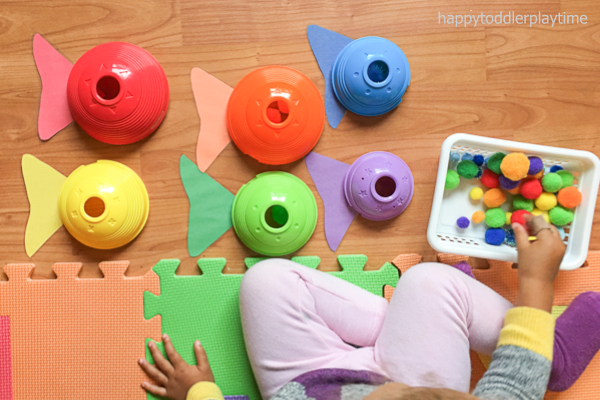
What You’ll Need:
- Stacking cups
- Pom Poms
- Construction paper
- Scissors
- Tape
Quick Setup: Cut out fish tails from construciton paper to match the colors of the stacking cups. Tape them to the floor and place the stacking bowls on them so they looks like little colorful fish. Invite toddler to sort the Pom Poms based on color.
58. Feed the Squirrel


What You’ll Need:
- Empty dish soap bottled, marker, construction paper and glue
- sensory bin
- Bowls,
- Birdseed
Quick Setup: Create a squirrel out of the dish soap bottle by drawing the face and glueing on the tail from construction paper. Fill sensory bin with birdseed. Add bowls and scoopers and invite toddler to feed the squirrel the birdseed by filling up the dish soap bottle.
59. Cereal Sensory Bin

What You’ll Need:
- Sensory bin
- Cereal
- Scoops, cups, and tweezers or toy animals like dinosaurs or farm animals
Quick Setup: Fill a sensory bin with cereal, especially those with different shapes, sizes, and textures. Provide tools like scoops and tweezers for children to explore and manipulate the cereal. This simple yet effective sensory bin is perfect for tactile and visual sensory development.

60. Ball Drop

What You’ll Need:
- Cardboard box
- Scissors
- Markers
- Ball pit ball
Quick Setup:
Cut holes in the cardboard box large enough to fit the ball pit balls. Colour the outside of the box using the marker to match the different colors of the ball. Invite your toddler to drop balls down the box based on the colors.
61. Button Match


What You’ll Need: Buttons, markers, a cardboard tube, contact paper.
Quick Setup: Trace the different button shapes on the cardboard tube using a marker or if your buttons are al the same shape, create colored dots based on the different buttons you have. Wrap a cardboard tube with contact paper, sticky side out. Let your toddler match and stick additional buttons over the shape or color.

62. Oats Sensory Bin

What You’ll Need: Oats, sensory bin, cups, scoops, or toy diggers, Easter eggs
Quick Setup: Fill the bin with oats and place various scoops, cups, or toy diggers inside. Encourage your child to scoop, pour, and dig through the oats, which helps improve their sensory exploration and motor skills while they enjoy the soothing texture of the oats.

63. DIY Lid Drop Box


What You’ll Need: Large box, various lids, scissors.
Quick Setup: Cut slots of different shapes and sizes into the sides of a large box. Collect various lids and teach your child to match each lid to the correctly shaped slot, improving their problem-solving skills and hand-eye coordination.
64. LEGO Duplo Car Wash

What You’ll Need:
- LEGO vehicles
- Water
- Mild soap
- Brushes or sponges,
- Shallow tray.
Quick Setup: Fill a shallow tray with soapy water, and place various LEGO vehicles into it. Give your child brushes or sponges to wash the vehicles. This not only simulates a real-life car wash but also helps improve fine motor skills and sensory processing through tactile play with water and soap. Help you toddler build a mini car wash building using the LEGO.

65. Pipe Cleaner Lacing

What You’ll Need: Pipe cleaners, a colander or a salt spinner basket.
Quick Setup: Flip the colander or basket upside down and provide colorful pipe cleaners. Show your child how to thread the pipe cleaners through the holes, which helps develop their dexterity and cognitive skills through playful interaction.

66. Ball Wash


What You’ll Need:
- Plastic balls,
- water,
- mild soap
- Sponges
- brushes
Quick Setup: Fill a container with water and add some mild soap. Place dirty plastic balls into the water and give your child sponges or brushes to clean them. This activity mimics everyday cleaning tasks, teaching practical life skills and enhancing sensory experiences.
67. Pom Pom Drop


What You’ll Need:
- Tubes (such as PVC pipes, cardboard tubes, or paper towel rolls)
- Tape (masking or painters)
- Pom poms in various sizes and colors
- Containers or buckets
Quick Setup: Start by securing the tubes vertically to a wall or chair using tape, arranging them so they create a series of chutes. Place containers or buckets at the bottom of each tube to catch the pom poms. Provide your child with a collection of colorful pom poms. Show them how to drop the pom poms into the tops of the tubes and watch as they tumble down into the containers. This activity is excellent for developing fine motor skills and hand-eye coordination as your child picks up and places each pom pom. It also introduces basic concepts of gravity and cause and effect, making it a fun and educational experience.

68. Mega Blok Wash

What You’ll Need:
- Mega Bloks or large building blocks
- Water
- Mild soap or baby shampoo
- Brushes or sponges
- Large bin or container
Quick Setup: Fill a large bin or container with warm water and add a squirt of mild soap or baby shampoo to create a gentle cleaning solution. Place the Mega Bloks in the bin. Provide your child with brushes or sponges suitable for their hands. Encourage them to scrub and clean each block. This not only mimics real-life cleaning tasks, helping them to learn about household chores in a fun way, but also enhances their fine motor skills and sensory development through tactile play with soapy water.
69. Pom Pom Sensory Bin

What You’ll Need:
- A large sensory bin or container
- A variety of colorful pom poms
- Tools such as tongs, scoops, or spoons
- Optional: Cups or small containers for sorting
Quick Setup: Fill your sensory bin with a colorful assortment of pom poms, which can vary in size and texture for a richer sensory experience. Provide your toddler with tools like tongs or scoops to handle and manipulate the pom poms. I added popsicle molds for something different. This helps enhance their fine motor skills and coordination. If you include cups or small containers, toddlers can also engage in sorting activities, which are great for color recognition and cognitive development.
70. Bubble Wrap Road

What You’ll Need:
- Bubble wrap
- Tape
- Toy cars, trucks, or other small wheeled toys
Quick Setup: Lay out lengths of bubble wrap on the floor, securing the edges with tape to prevent slipping. The bubble wrap should be laid out like roads or tracks, you can use a sharpie to draw the lines in the road in the middle of the bubble wrap. Provide your child with toy cars, trucks, or any small wheeled toys to drive over the bubble wrap. As the toys move over the bubble wrap, the popping sound creates a fun auditory experience, and the texture under their hands or feet (if they walk on it) adds a tactile element to their play.
71. Painting Ice Cubes

Materials Needed:
- Ice cube tray
- Water
- Food coloring or washable paint
- Popsicle sticks or small spoons (optional)
- Paper or a plastic tray
Quick Setup:
Begin by filling a sensory bin with ice cubes. Grab your washable kids paint and brushes and invite your child to paint the ice. This activity is not only great for exploring colors and cause and effect (observing how ice melts) but also for sensory play and fine motor development as they maneuver the cold cubes.
72. Frozen Pom Poms

Materials Needed:
- Colorful pom poms
- Water
- Small containers or ice cube trays
- Freezer
Quick Setup:
Start by placing a few colorful pom poms into each compartment of an ice cube tray or small container. Fill each with water, ensuring the pom poms are submerged. Place the trays or containers in the freezer and let them freeze completely. Once frozen, remove the ice blocks from the trays and give them to your toddler to play with in a safe, supervised area, perhaps during bath time or on a water-resistant play mat. This activity is perfect for sensory exploration and can help teach concepts like cold, melting, and color mixing as the ice melts and the pom poms are freed.
73. Taste-Safe Bubble Foam

Materials Needed:
- 1 Can of Chick peas
- 1/4 Cream of Tartar
- Hand blender
- Blue food colouring
- Bowl
Begin by draining the liquid from a can of chickpeas into a large bowl. Add cream of tartar to help stabilize the mixture. If you want to add a splash of color, now’s the time to mix in a few drops of food coloring. Using a hand mixer or a whisk, beat the chickpea liquid vigorously until it becomes light and foamy, much like whipped cream. The texture should be thick enough to hold peaks. Once it’s ready, spread the foam out on a tray or directly onto a table covered with a clean surface. Let your toddler dive in and explore the fluffy texture with their hands. This activity is excellent for sensory play, allowing children to feel and play with the foam safely, and even taste it without worry.
74. Birdseed Kitchen Sensory Bin

What You’ll Need:
- A large sensory bin or container
- Birdseed
- Kitchen utensils like pots, pans, spoons, and measuring cups
- Optional: small toy figures or additional natural elements like pine cones, leaves, and small stones
Quick Setup: Fill your sensory bin with birdseed to create a base that mimics tiny grains or pebbles. Introduce various kitchen utensils such as pots, pans, spoons, and measuring cups into the bin. These tools will allow children to scoop, pour, and transfer the birdseed, mimicking cooking activities. If you choose, add small toy figures or natural elements like pine cones and leaves to enrich the sensory experience and inspire more imaginative play scenarios.
75. Ball Painting

What You’ll Need:
- Washable paints in various colors
- Large sheets of paper or a roll of butcher paper
- Balls of different sizes and textures (such as golf balls, ping pong balls, and small rubber balls)
- A shallow box or tray to contain the paper and paint
Quick Setup: Spread the large sheets of paper or unroll a section of butcher paper to create your painting surface. Squirt different colors of washable paint onto the paper in various spots. Let your toddler roll, toss, or drop the balls across the paper. As the balls move through the paint and across the paper, they’ll create unique patterns and lines, depending on their size and texture.
76. Tube Pattern Matching


What You’ll Need:
- Cardboard tubes (from paper towel or toilet paper rolls)
- Cardboard box
- Scissors
- Washi tape
Quick Setup: Start by decorating the cardboard tubes ends with the different pattered washi tape. Cut holes in the cardboard box large enough to fit the tubes. Decorate the outside of the holes with the same tape used on the different tubes. Invite your toddler to sort the tubes by pattern by pushing them through the correct hole!
77. Magna-Tile Colour Sorting Boxes

What You’ll Need:
- Magna-Tiles or similar magnetic building tiles
- Pom Poms or squeeze bottle caps
- Colorful tongs
Quick Setup: Use the magnetic tiles to create boxes in all the colors of the rainbow. Put the squeeze bottle caps in a pile and invite your one-year old toddler to use the tongs or their fingers to sort the caps in the correct colored box. This activity not only allows children to work on their color recognition skills but also encourages spatial awareness and fine motor development as they manipulate the magnetic tiles and match them to the right containers.
78. Water Table Kitchen

What You’ll Need:
- Water table
- Various kitchen utensils (spoons, cups, funnels, ladles)
- Optional: Soap bubbles, plastic food items
Quick Setup: Fill the water table with water and if desired, add a few squirts of child-safe soap to create bubbles. Place the kitchen utensils and plastic food items in the water table. Invite your child to ‘cook’ and ‘serve’ meals using the utensils, enhancing their imaginative play and giving them a fun, sensory experience with the water and bubbles.

79. Paint the Toys

What You’ll Need:
- Washable paints
- Brushes or sponges
- Old or washable toys that can be painted
Quick Setup: Set up a painting station with washable paints and brushes or sponges. Select a variety of old toys that are safe to paint. Show your child how to paint the toys, encouraging them to experiment with different colors and techniques. Once they are down, hand them a sponge and bucket pilled with warms soapy water and invite them to wash off the paint!

80. DIY obstacle course

What You’ll Need:
- Various household items (chairs, cushions, boxes, blankets) or Various backyard toys if doing it outside such as slides, skipping ropes, chairs, boxes, hola hoops
- Small cones or markers
- Timer (optional for older children)
Quick Setup: Use household items to create a course in your living area or backyard. Set up stations that children need to navigate around, under, or through. For example, lay a blanket over two chairs to create a tunnel, use cushions for a hopping section, and boxes can be obstacles to weave around. This activity is excellent for promoting physical activity, enhancing motor skills, and improving problem-solving abilities as children figure out the best ways to navigate the course.

81. Rubber Duck Pond Sensory Bag

What You’ll Need:
- Large resealable plastic bag
- Duct tape
- Water
- Blue food coloring (optional)
- Small rubber ducks
- Green foam sheets
Quick Setup: Fill the plastic bag about halfway with water, adding a few drops of blue food coloring for a pond-like effect (option). Cut out Lilly pads from green foam sheets and place them in the bag. Seal the bag tightly, removing as much air as possible, and secure with additional tape for safety. Secure with duct tape. Hand your toddlers some rubber duct and let the bound and swim their ducts on top of the pond, letting them ‘swim’ through the water. This is great mess-free sensory exploration and can be very calming for one-year old toddler.
82. Dried Pasta Sensory Bin

What You’ll Need:
- Sensory bin or large container
- Various types of dried pasta (different shapes and sizes)
- Additional items like scoops, cups, or toy cars (optional)
Quick Setup: Fill your sensory bin with an assortment of dried pasta. You can enhance the sensory experience by adding items like scoops or cups for pouring and measuring, or toy cars for creating pasta ‘roads’ and landscapes. This setup encourages fine motor development, tactile exploration, and imaginative play, providing hours of engaging fun for little ones.
83. Sensory Bin with Shaving Cream
What You’ll Need:
- Large sensory bin or container
- Shaving cream
- Toy animals, spoons, or small plastic items
Quick Setup: Fill the sensory bin with a generous amount of shaving cream to cover the bottom. Place various toy animals or spoons within the bin for your child to find and manipulate. This setup allows children to explore texture and sensory play, encouraging them to dig through the shaving cream to uncover hidden toys. It’s a fun and messy activity that enhances tactile awareness and can be very calming.
84. Mega Blok Rescue
What You’ll Need:
- Mega Bloks or similar large building blocks
- Sensory bin or large container
- Painter’s tape or string
Quick Setup: Place Mega Bloks in the sensory bin. Place masking tape or string across the sensory bin in various directions. Invite your toddler to try and grab or rescue the blocks without touching the tape or string.
85. Feed and Wash the Animals
What You’ll Need:
- Sensory table
- Toy animals
- Small bowls or containers for ‘food’ (can use pompoms, beads, or pretend food)
- Crushed cereal like cheerios
- Towels or sponges
Quick Setup:
Fill one side of the sensory table or sensory bin with water and the other side with crushed cereal or oats. Add farm animal toys and small bowls and scooper. Add towels and sponges. Invite your toddler to feed the animals in. one bin and then wash them in the other bin with a sponge and dry them off with towels.
86. Fruit Sensory Water Play
What You’ll Need:
- Large bin or water table
- Water
- Plastic fruits or real fruit
- Nets or scoops
Quick Setup:
Fill the bin or water table with water and drop in various cut fruits. Provide nets or scoops for your toddler to ‘fish’ the fruits out of the water. This play activity is excellent for sensory exploration, developing fine motor skills, and teaching about different fruits while providing a cooling activity on hot days.
87. Magna Tile Cap Drop


What You’ll Need:
- Magna-Tiles or similar magnetic building tiles
- Bottle caps
- A container or designated drop zone
Quick Setup:
Construct towers or various structures using Magna-Tiles and incorporate ledges or platforms where bottle caps can be balanced. Encourage your child to carefully place and drop bottle caps from the top of the magnetic tile structures into a container below. This game aids in the development of fine motor skills, coordination, and understanding of gravity and spatial relationships.
88. DIY Flip Book

What You’ll Need:
- A stack of paper (Post-it notes work well for beginners)
- Book or puzzle
Quick Setup:
Grab your toddler’s favorite book or puzzle. Place post-it notes over different picture in the book. You can also do this with a puzzle. Remove the pieces and place the post it notes over the space where the puzzle pieces go. Invite your one-ear old to remove the post its in the book and identify the object. For the puzzle have them remove the post it notes and return the correct puzzle piece.

89. Sensory bin with shredded paper

What You’ll Need:
- A large sensory bin or container
- Shredded paper
- Small balls, cups, or other small toys
- Optional: small figurines or items for hiding and seeking
Quick Setup:
Fill your sensory bin with a generous amount of shredded paper, creating a fluffy, tactile base. Add small balls, cups, and other toys that your child can bury and discover within the paper. If you like, hide small figurines or items throughout the bin and encourage your child to go on a treasure hunt. This activity is excellent for sensory exploration as your toddler digs, pours, and scoops through the shredded paper. It helps develop fine motor skills and promotes imaginative play, offering endless opportunities for creative scenarios.
90. Easter Egg Puzzle Activity

What You’ll Need:
- Large sheet of paper
- Dot markers
- Plastic Easter eggs (halved)
- Basket to hold the egg halves
Quick Setup:
Lay the large sheet of paper on a flat surface. Use dot markers to create various colored dots across the page, spacing them out enough so each dot can be covered by a halved Easter egg. Place the halves of the plastic Easter eggs in different colors in a basket. Invite your one-year-old to match the color of each egg half to a corresponding dot on the paper and cover it. This activity is excellent for color recognition and fine motor development as your toddler needs to grasp the egg halves and place them precisely over the dots.

91. Painting Bread
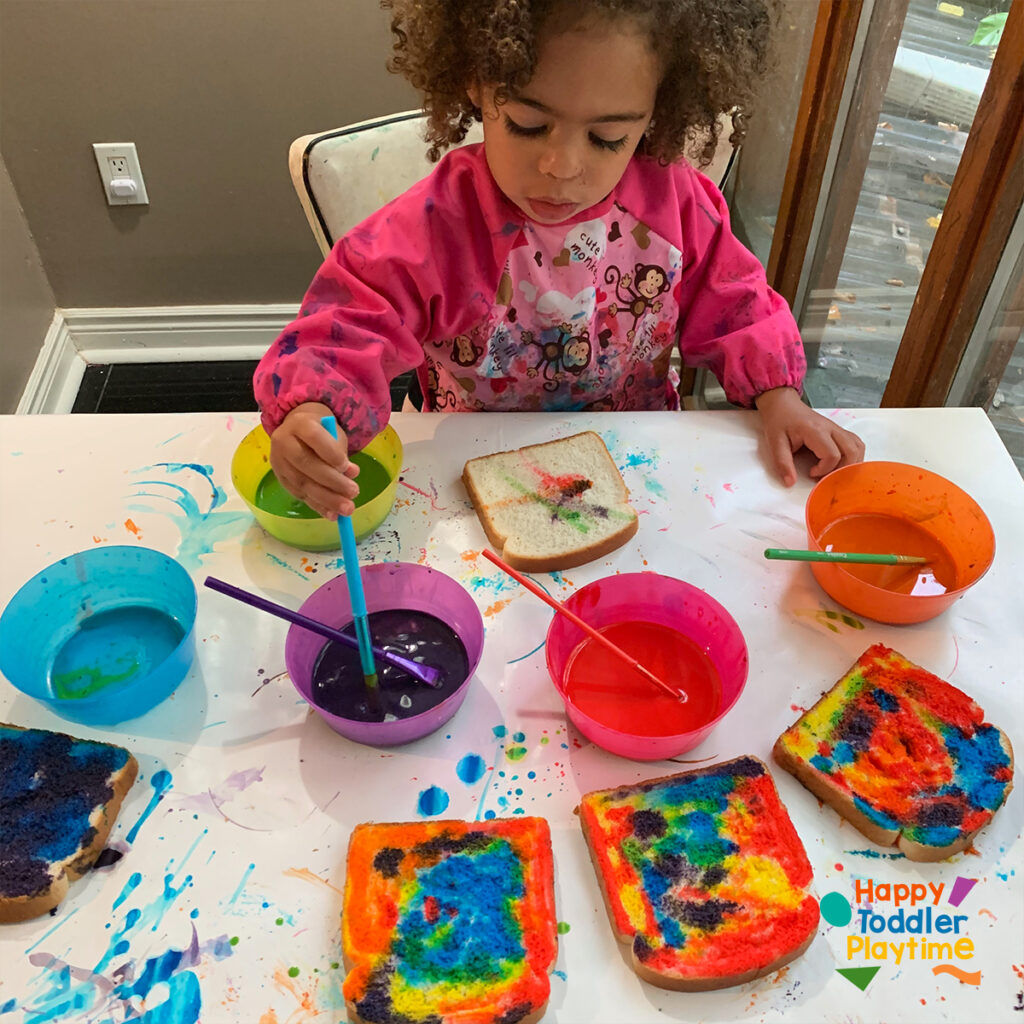
What You’ll Need:
- White bread slices
- Food coloring
- Milk
- Small bowls
- Clean paintbrushes
Quick Setup:
Start by pouring a small amount of milk into several small bowls. Add a few drops of different food coloring to each bowl to create various “paint” colors. Stir well to mix the colors with the milk. Give your toddler a clean paintbrush for each color to avoid mixing the paints. Lay out the slices of white bread on a clean surface, and let your one year old paint on the bread with the milk and food coloring mixture. They can create colorful designs and patterns. Once they’re done painting, the bread can be toasted and then eaten as a fun and tasty treat.
92. Hand Sock Painting

What You’ll Need:
- Non-toxic washable paint
- Paper or a large roll of butcher paper
- Old socks
- A tray or shallow containers for the paint
- Tape (if using paper)
Quick Setup:
Spread out the paper or butcher paper on the floor or a table, securing it with tape to keep it in place if necessary. Pour different colors of washable paint into the tray or shallow containers. Have your toddler put on an old sock over each hand. Encourage them to dip their sock-covered hand into the paint and then press or smear the paint onto the paper, creating various designs and patterns. This activity is excellent for sensory exploration as the sock provides a unique texture, and the activity itself encourages creative expression and motor skill development.

93. Cardboard Tube Bowling

What You’ll Need:
- Several cardboard tubes (from paper towel or toilet paper rolls)
- A small ball or a beanbag
- Tape or markers for decorating (optional)
- A flat surface like a hallway or a room with sufficient space
Quick Setup:
If you wish, begin by decorating the cardboard tubes with tape or markers to make them more visually appealing and engaging for your one year old. Arrange the tubes in a triangle formation at one end of your chosen play area to mimic traditional bowling pin setup. Provide your toddler with a ball to use as the bowling ball. Encourage them to roll or toss the ball towards the tubes to try and knock them down.

94. Shredded Paper Garden Sensory Bin

What You’ll Need:
- Sensory bin or large container
- Brown shredded paper (as a substitute for soil)
- Pieces of brown material or brown yarn to enhance the dirt effect
- Artificial flowers
- Toy spade or small gardening tools
- Small pots or containers
- Gardening gloves (child-sized)
Quick Setup:
Fill your sensory bin with brown shredded paper, spreading it evenly to mimic the look of garden soil. If available, add extra layers of brown material or yarn for a more textured “dirt” feel. Scatter artificial flowers throughout the “soil,” partially burying them to look like they are growing. Place small pots or containers within the bin, which can be used to “plant” the flowers. Provide your toddler with a toy spade or gardening tools and a pair of gardening gloves to make the experience feel more authentic. Encourage them to dig, plant, and rearrange the flowers in the pots, mimicking real gardening activities.

95. Water Transfer Activity

What You’ll Need:
- Two containers (one filled with water, the other empty)
- Sponges or pom poms
- Towels for spill management (optional)
Quick Setup:
Place one container filled with water and the empty container side by side. You might want to set this up in an area where minor spills are not a concern, or place towels underneath for easier cleanup. Provide your toddler with sponges or pom poms. Show them how to soak the sponge or pom poms in the water-filled container, then squeeze them over the empty container to transfer the water. Encourage them to continue this process until the water is moved from one container to the other, or as long as their interest persists.
96. Spaghetti Drop Activity

What You’ll Need:
- Dried spaghetti or thin sticks
- Cardboard tubes (from paper towel or toilet paper rolls)
- Tape (optional to secure tubes)
Quick Setup:
Arrange the cardboard tubes vertically by standing them up on a table or taping them to a wall or edge of a table so they don’t tip over. Provide your child with handfuls of dried spaghetti or thin sticks. Challenge them to drop the spaghetti through the tubes, aiming to get them to pass through without sticking out. This simple yet engaging activity tests and enhances their fine motor skills and hand-eye coordination as they learn to align and adjust their approach based on the tube’s position and the fall of the spaghetti.
97. Muffin Tin Veggie Sort

What You’ll Need:
- Muffin tin
- Variety of small vegetables and fruit or play food vegetables
- Labels or colored markers (optional)
Quick Setup:
Clean the muffin tin and prepare it for the sorting activity. If using real vegetables, select small ones such as cherry tomatoes, baby carrots, broccoli florets, and snap peas, ensuring they are washed and safe for handling. If using play food, gather a variety of vegetable and fruit types. Optionally, you can label each muffin cup with a sticker or a colored marker to specify where each type of vegetable should go. Invite your child to sort the vegetables into the muffin cups based on type, color, or size, depending on the learning objective you wish to focus on.

98. Discovery Bin Activity

What You’ll Need:
- A large bin or basket
- A variety of items to discover that are all similar (small toys the same color, or all soft items, or all kitchen tools, or all round fruits). Optional: themed items to fit a specific learning topic or season
Quick Setup:
Scatter a variety of interesting objects throughout the bin. These can be anything from small toy figures that are the same color, soft balls and small stuffed animals or all kitchen tools or different types of veggies.
99. Wine Cork Push Activity

What You’ll Need:
- Yogurt container with a lid
- Scissors
- Wine corks
Quick Setup:
Use the scissors to carefully cut a hole in the lid of the yogurt container. The hole should be just large enough to snugly fit the wine corks. Ensure the edges around the hole are smooth to avoid any sharp edges. Place several wine corks in front of your one-year-old, and show them how to push the corks through the hole into the container. This activity helps develop fine motor skills as the child practices pushing the corks through the hole, and also enhances problem-solving abilities as they figure out how to align and fit the corks into the hole.
100. Jumbo Pasta Sensory Bin

What You’ll Need:
- A large sensory bin or container
- Jumbo pasta (various shapes like shells, tubes, and spirals)
- Rice or dried peas for additional texture
- Optional: scoops, spoons, cups, or small containers for sorting and transferring
Quick Setup:
Fill your sensory bin with a mix of jumbo pasta and either rice or dried peas to create a diverse tactile environment. The different textures and shapes will stimulate your child’s sensory exploration. Provide tools such as scoops and cups to encourage scooping, pouring, and transferring activities, which are great for developing fine motor skills and hand-eye coordination. You can also incorporate color sorting or counting games by asking your child to sort the pasta types or count how many of each shape they can find, making the activity both fun and educational.

101. Cardboard Box Tunnel

What You’ll Need:
- Large cardboard boxes
- Tape (duct tape or strong packing tape)
- Scissors or a box cutter (for adult use only)
- Optional: markers, paint, or stickers for decoration
Quick Setup:
Start by selecting one or more large cardboard boxes. If you have several boxes, you can create a longer tunnel by cutting off one end of each box and securely taping them together end-to-end. If using a single box, cut out both ends to form a tunnel. Reinforce the connections and any cut edges with tape to ensure stability and safety. If desired, decorate the outside of the tunnel with markers, paint, or stickers to add a fun, creative element. Place the tunnel in a play area, and encourage your child to crawl through. If you have other play tunnels, connect them to the box. This activity promotes gross motor skills as children crawl or scoot through the tunnel and can also spark imaginative play, as the tunnel can be integrated into various play scenarios like a race course, secret passageway, or fort.

Playing Safely
It’s important to note that when it comes to playing with 1 year olds, constant adult supervision is required to ensure their safety. While these no-prep activities can be fun and educational for young children, it’s important to remember that they may still be exploring the world and learning about cause and effect. This means that there may be potential hazards in the environment that they might not recognize, and it’s up to adults to ensure that they stay safe.
Therefore, before engaging in any of these activities, it’s important to make sure that the environment is free of any potential hazards, such as sharp objects or small items that could be choking hazards. Additionally, parents and caregivers should remain actively engaged and attentive to the child’s behavior and any changes in their surroundings during playtime.
While these activities can be enjoyable for both children and adults, safety should always be the top priority. By providing constant supervision and taking necessary precautions, parents and caregivers can ensure that their child has a fun and safe experience while playing and learning.
Play2Learn Toddler & Preschool Programs for Curious Toddlers
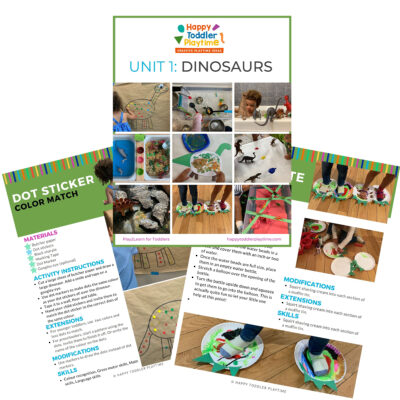
There is no limit to your toddler’s energy and curiosity. That energy and curiosity although a joy can be challenging at times. Their interest in just about everything around them is what makes them great learners. One and two year olds can soak up so much just from their senses!
But as a teacher or parent that thirst for learning can be exhausting. That is why I created this toddler and preschooler program. To help you get the most out of this time with your curious toddler without having to come up with creative ways to play and interact with them.
Play2Learn for Toddlers includes 20 Units for toddlers. Each 2-week toddler unit has 20 super easy to set up and engaging activities for toddlers 18 months to 3 years.
Play2Learn Preschool which includes 20 Units for preschoolers. Each 2-week preschoolers unit has 20 unique and easy to set up and engaging activities for preschoolers 3 years to 5 years. That’s over 800 learning activities for your toddler and preschooler at your fingertips! So many ideas you and your child will never be bored again!
These toddler and preschool lesson plans and activities will definitely keep you and your toddler and preschooler busy playing and learning!
Click here for more information: Play2Learn
Book: Exciting Sensory Bins for Curious Kids
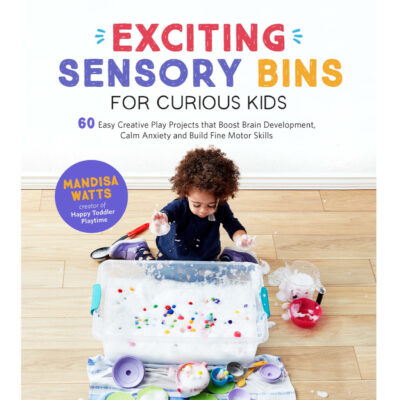
Did you know I wrote a book of sensory bins? Click here for more information Exciting Sensory Bin for Curious Kids. Or grab your copy at Amazon.
Boring afternoons are made exciting with awesome animal-based bins, like Salty Shark Bay or Yarn Farm. Pretend play bins like Birthday Cake Sensory Play or Bubble Tea Party encourage creativity and imagination. And your kids will have so much fun they won’t even know they’re getting smarter with STEAM (science, technology, engineering, art and math) activities like Sink or Float Soup, Magnetic Letter Hunt or Ice Cream Scoop and Count.
Designed for toddlers 18 months and up.
Book: Super STEAM Activity Book for Kids
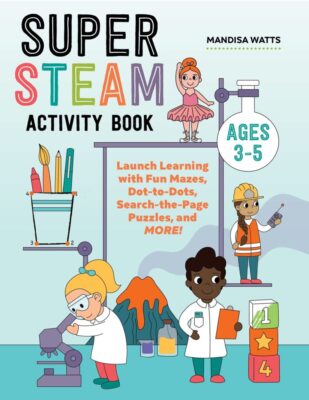
Learning all about science, technology, engineering, art, and math sets kids up for scholastic success―and it can be so much fun! Watch kids enjoy building STEAM skills as they color friendly fish, help water find its way to tree roots, solve math problems with mazes, and more.
Find out more and grab your copy here.
Designed for preschoolers 3 years old and up.
Book: Big Book of Riddles for Kids
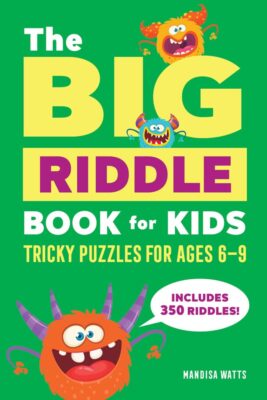
Riddle me this: What’s an exciting way to practice critical thinking while having a blast? The Big Riddle Book for Kids, of course! From hilarious puns to tough brain teasers, kids can build problem-solving skills with hundreds of riddles tha. t show them how to think outside the box.
- 350 riddles for kids—Have hours of fun with riddles, puns and jokes, and math and logic puzzles that’ll get their wheels turning!
- Level up their skills—Riddles get trickier as kids progress through the book, challenging them as they get better at solving puzzles!
- Double-check their work—Kids can check their answers in the back of the book with a handy answer key.
Help children expand their minds while having fun with this puzzle book for kids!
Designed for kids ages 6 years old and up.
TV Show: Curious Crafting
I’m so excited to share my crafting TV show Curious Crafting which launched in July 2022 on TVOkids and TVOkids YouTube! Season 2 aired in August 2023! My show was also nominated in 2023 for Best Live Action Preschool Series by the Youth Media Alliance Awards of Excellence.
Curious Crafting Season 1 is also now airing in Australia on ABC! Watch it here!
Set in the ultimate crafting space, Curious Crafting is a short form pre-school age series about the joy of making crafts. I lead a rotating cast of adorable little preschoolers (including my own) making magic out of common household objects.
In each episode we transform recycled items into magical crafts like a milk carton school bus, paper bag puppet or cotton pad turtle. The crafters learn and laugh their way through each activity while demonstrating what their young imaginations can create.
Curious Crafting shares the adventure and joy of making art with takeaway lessons for creating crafts at home.
This show designed for toddlers and preschoolers 2.5 years old and up.
WANT YOU TRY ANY OF THESE NO-PREP ACTIVITIES FOR 1 YEAR OLDS WITH YOURS LATER? PIN IT NOW, AND FIND IT LATER!